How are laws changing for asylum seekers
U.S. asylum law is changing in ways that make timing, evidence, fees, and border processing more important than ever. People seeking protection still have asylum rights under immigration law, but recent rules and policies can affect where a case is heard, whether an interview happens, whether work authorization remains available, and what happens at the U.S. border. This guide explains the major changes in plain language so asylum seekers and families can understand the risks, preserve legal protections, and make informed next steps.
Table of Contents
How are U.S. asylum laws changing for asylum seekers right now?
The biggest shift is that the asylum process is becoming more restrictive and more procedural. Recent immigration policies have added new fees, changed affirmative asylum interview practices, tightened border screening rules during high-encounter periods, and increased the consequences of missed notices, missed hearings, or incomplete evidence. At the same time, the basic legal question remains the same: whether the applicant meets the refugee definition by showing past persecution or a well-founded fear of future persecution because of race, religion, nationality, political opinion, or membership in a particular social group. (thefederalregister.org)
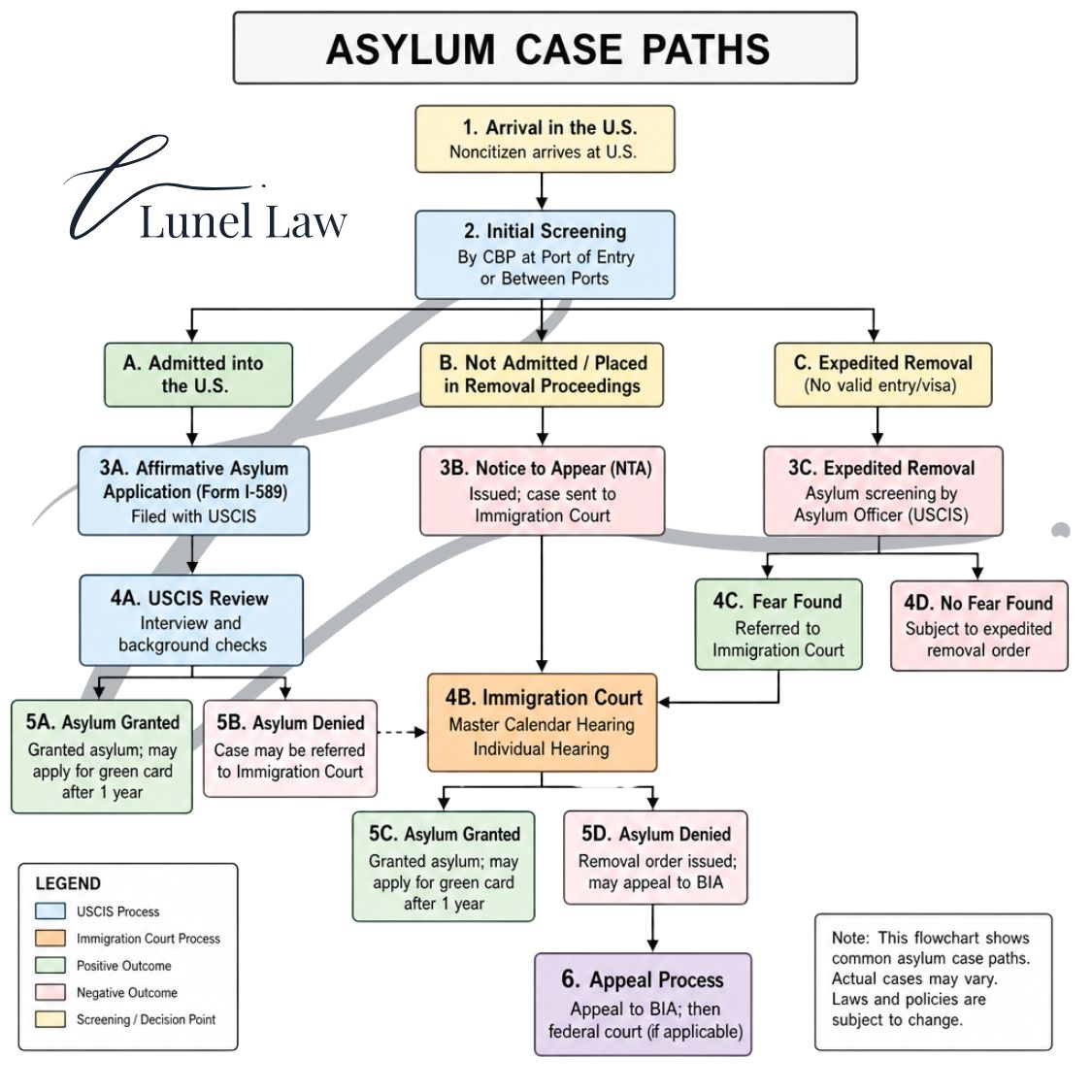
For asylum seekers, this means the law is not simply “open” or “closed.” It is a changing system where the path taken matters. A person who files affirmatively with USCIS may face different procedures than someone placed in removal proceedings. A person who entered at or near the southern border may face additional rules that do not apply in the same way to someone who entered with a visa and later applied from inside the United States.
That distinction matters because a strong asylum case is no longer only about telling the truth. It is also about filing correctly, protecting deadlines, updating addresses, responding to fee notices, preparing evidence early, and understanding whether the case is with USCIS, EOIR immigration court, or both.
The foundation of asylum law has not disappeared
Even as asylum seeker laws in the U.S. change, the core protection remains tied to refugee status. A person generally must show that they cannot safely return to their country because of persecution or a well-founded fear of persecution connected to a protected ground. EOIR explains that asylum allows a person to remain in the United States while they have asylee status, and that a refugee is someone unable or unwilling to return because of protected-ground persecution. (justice.gov)
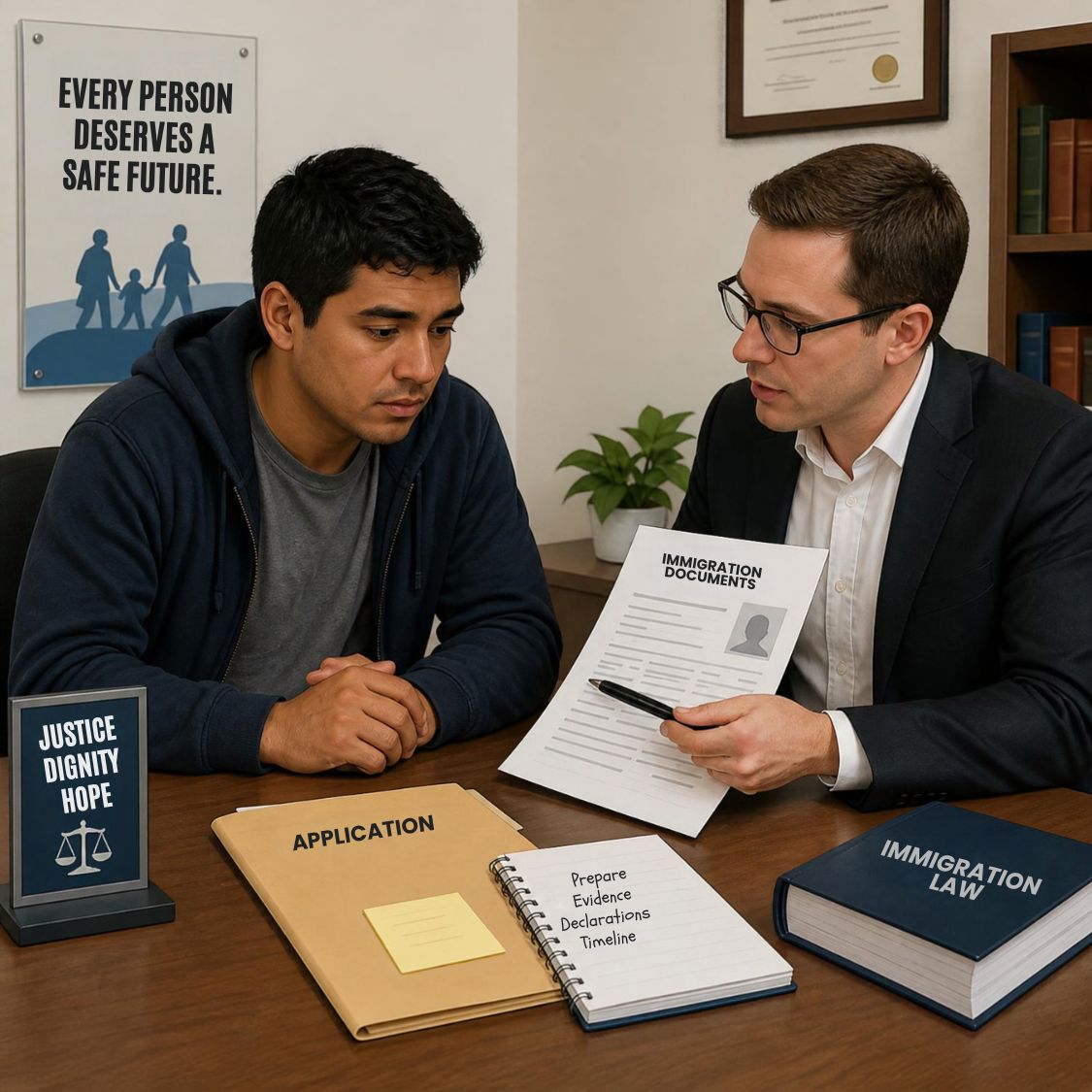
This legal foundation is important because policy changes do not erase the need for careful evidence. Applicants should be ready to explain what happened, who caused the harm, why it happened, whether the government was involved or unable or unwilling to protect them, and why relocation inside the home country is not reasonable. USCIS Form I-589 asks for detailed facts, including dates, places, descriptions of harm, feared future harm, and supporting country-conditions evidence when available. (uscis.gov)
The practical takeaway is simple: the stronger and more organized the record, the better positioned the applicant is when procedures change. A complete declaration, identity documents, police or medical records where available, witness statements, expert materials, and country reports may help the decision-maker understand the full context of the claim.
Key legal protections still matter
Asylum seekers should understand these continuing protections and limits:
- Protection from return to persecution: Asylum, withholding of removal, and Convention Against Torture protection can prevent removal to a country where the applicant faces qualifying harm.
- The right to present a claim: The process may be more limited at the border, but protection claims still require legal screening in covered circumstances.
- Immigration court review in many cases: If USCIS does not grant an affirmative asylum case, the case may be referred to an immigration judge.
- Protection for family members in some asylum grants: Eligible spouses and children may be included in certain asylum applications.
- Possible future permanent residence: A person granted asylum may eventually be able to apply for lawful permanent residence, if eligible.
These protections are powerful, but they are not automatic. Bars, deadlines, criminal history, prior removal orders, safe-third-country issues, and credibility problems can all change the legal analysis.
New fees and payment rules are affecting pending asylum cases
One major change is the growing role of asylum-related fees. USCIS announced rules tied to H.R. 1 requirements, including the Annual Asylum Fee and consequences connected to nonpayment. USCIS stated that, under the interim rule, failure to pay within the required period could lead USCIS to reject a pending asylum application and affect related work authorization; however, USCIS also notes that an August 5, 2026 federal court injunction changed how consequences for missed Annual Asylum Fee deadlines are implemented while the case remains pending. (content.govdelivery.com)
For families, this is more than an administrative issue. If a notice is missed because of an old address, language barriers, detention transfer, or confusion about which agency has the case, the consequences can be serious. Asylum seekers should keep copies of every receipt, notice, payment confirmation, and address update. They should also verify whether the fee applies to their case instead of assuming that old rules still control.
A careful file should include:
- A copy of the Form I-589 and all supplements.
- Proof of filing or court submission.
- Every USCIS, ICE, CBP, and EOIR notice.
- Payment notices and confirmations, if any.
- Address-change confirmations for USCIS and immigration court.
- Work permit filings, receipts, approvals, denials, or renewals.
- A calendar of hearing dates, interview dates, deadlines, and fee deadlines.
Small administrative mistakes can now create larger legal problems. That is why asylum applicants should treat every government notice as urgent.
Affirmative asylum interviews may not happen in every case
Another significant development is the change to affirmative asylum processing. A 2026 interim final rule permits USCIS asylum officers to refer certain affirmative asylum applications to EOIR immigration court without first conducting an asylum interview. The rule removes references to a “right” to an interview in certain regulations and allows referral based on the written record and other relevant evidence in defined situations. (thefederalregister.org)
This change makes the initial filing more important. In the past, many applicants expected to explain missing details at the interview. Under the newer framework, some cases may move toward immigration court before that opportunity occurs. That does not mean every case will skip an interview, but it does mean the written application should be treated as the first full presentation of the claim.
Applicants should avoid vague statements such as “I was threatened” without context. A stronger explanation identifies who made the threat, what was said or done, when it happened, why the applicant was targeted, whether the police or government could help, and what would likely happen if the applicant returned.
What changed at the U.S. border?
Border rules have become more restrictive, especially for people who cross the southern border without authorization during periods when special border measures apply. DHS described rules under the “Securing the Border” framework that can make certain noncitizens generally ineligible for asylum unless they show exceptionally compelling circumstances, while still screening people who express fear for other protections such as withholding of removal or Convention Against Torture protection under a higher standard. (dhs.gov)
The result is a more complicated border process. Some people may still receive fear screenings, but the standard, the timing, and the available protection may differ from traditional asylum processing. People who are removed may also face future reentry bars and other consequences.
This is where concerns about “asylum seeker laws violated at the U.S. border” often arise. A violation may involve failure to provide required fear screening, lack of interpretation, detention conditions, family separation issues, denial of access to counsel where permitted, or removal despite a stated fear. Whether the law was violated depends on the facts, the person’s immigration history, the applicable border rule, and any court orders in effect at the time.
Practical steps if rights may have been violated
If someone believes their asylum rights were ignored or violated, they should preserve evidence quickly:
- Write down dates, locations, officer names or badge numbers if known, and what was said.
- Save documents, wristbands, notices, receipts, deportation paperwork, and phone records.
- Identify witnesses, including family members, other migrants, sponsors, or advocates.
- Record whether an interpreter was requested or provided.
- Note whether the person expressed fear of return and how officials responded.
- Contact qualified immigration counsel as soon as possible, especially if removal is imminent.
These facts may support a motion, complaint, request for review, habeas petition, or other legal strategy, depending on the situation.
Immigration court procedure is becoming more important
As more asylum cases move into immigration court, EOIR procedure becomes central. EOIR distinguishes between affirmative asylum applications filed with DHS and defensive asylum applications filed by people already in removal proceedings. EOIR also warns that asylum applicants generally must file within one year of arrival unless an exception applies. (justice.gov)
Immigration court is formal. The judge may set deadlines for evidence, biometrics, pleadings, motions, and testimony. Missing a hearing can lead to an in absentia removal order. Filing late evidence may mean the judge refuses to consider it. Changing addresses with only USCIS may not update the court, and updating the court may not update USCIS.
A defensive asylum case should be built like litigation, not like a simple form submission. The applicant needs a consistent declaration, organized exhibits, translated documents, proof of service, witness planning, and preparation for cross-examination by government counsel.
Who is most affected by these changes?
The recent asylum law changes affect many applicants, but some groups face higher risk. People with pending cases for more than a year may be affected by annual fee rules. People with incomplete applications may be affected if USCIS reviews the written record before any interview. People at the southern border may be affected by heightened eligibility restrictions. People in detention may face compressed timelines and limited access to documents.
Applicants with prior removal orders, criminal history, missed hearings, or previous asylum filings should be especially cautious. These facts may trigger bars, reinstatement issues, reasonable fear proceedings, or limited forms of relief. EOIR explains that reasonable fear proceedings can apply to certain people subject to expedited removal or reinstatement of prior removal orders, and that immigration judge review may be limited in those settings. (justice.gov)
LGBTQ asylum seekers, political dissidents, religious minorities, journalists, domestic violence survivors, and people targeted by gangs or private actors may still have valid claims, but the case must clearly connect the harm to a protected legal ground. Lunel Law’s page on “Asylum protection for LGBTQ individuals” discusses how asylum applicants may show that a government is unable or unwilling to protect them from private harm, a key issue in many modern asylum cases. (lunellaw.com)
Building a stronger asylum case under changing rules
Changing asylum laws make preparation more important, not less. A well-prepared case should tell a coherent story and support it with documents where possible. The applicant should also be ready to explain missing documents, inconsistencies, travel history, prior applications, and delays in filing.
Use this checklist as a starting point:
- Clarify the protected ground: Identify whether the claim is based on race, religion, nationality, political opinion, or particular social group.
- Explain the persecutor: State who caused the harm and whether they were government officials, groups the government controls, or private actors the government cannot or will not control.
- Connect facts to law: Show why the harm happened because of the protected ground, not only because of general crime or instability.
- Document the timeline: Include dates of threats, attacks, reports, moves, departures, entries, and filings.
- Prepare country evidence: Use reliable reports to show conditions affecting similarly situated people.
- Preserve credibility: Review the application carefully so testimony, documents, and prior statements are consistent.
- Track every deadline: Calendar interviews, hearings, biometrics, filing deadlines, appeals, and fee notices.
- Get legal help early: The earlier a legal strategy is built, the easier it is to avoid preventable damage.
For detained asylum seekers, unlawful or prolonged detention may require a different legal tool. Lunel Law’s “Habeas Corpus for Immigration Detention” page explains that habeas corpus can be used in federal court to challenge unlawful immigration detention, including prolonged detention, improper bond denials, unreasonable delays, or detention that violates legal protections. (lunellaw.com)
Legal help matters when policies keep shifting
Asylum law is not static. Rules can change through statutes, agency regulations, executive policies, court injunctions, and immigration judge or Board of Immigration Appeals decisions. That is why the right strategy depends on the current rule, the applicant’s history, the court or agency handling the case, and the evidence available now.
Lunel Law presents its work as full-service immigration representation for people facing complex immigration processes, including removal proceedings and appeals. Its About page also emphasizes empowering immigrants so they can face the challenges of the legal system. (lunellaw.com)
For asylum seekers, that approach matters. A case may begin as a protection claim but quickly involve detention, work authorization, family issues, emergency motions, border records, or appeals. The goal is not only to file paperwork; it is to protect the person’s legal position at every stage.
The bottom line for asylum seekers and families
The answer to “How are laws changing for asylum seekers?” is that the U.S. asylum system is becoming faster in some places, stricter in others, and more demanding everywhere. The core asylum protections still exist, but applicants must be more careful with deadlines, written evidence, government notices, fees, court procedure, and border-related restrictions.
If you or a loved one is seeking asylum, do not wait for the system to become simpler. Organize the record, preserve proof, update addresses, track every deadline, and speak with qualified immigration counsel before a missed step becomes a removal risk. In a changing legal environment, preparation is one of the strongest protections an asylum seeker can have.
Related Posts