Understanding Your Alien Registration Number (A-Number): The Complete Guide for Immigrants
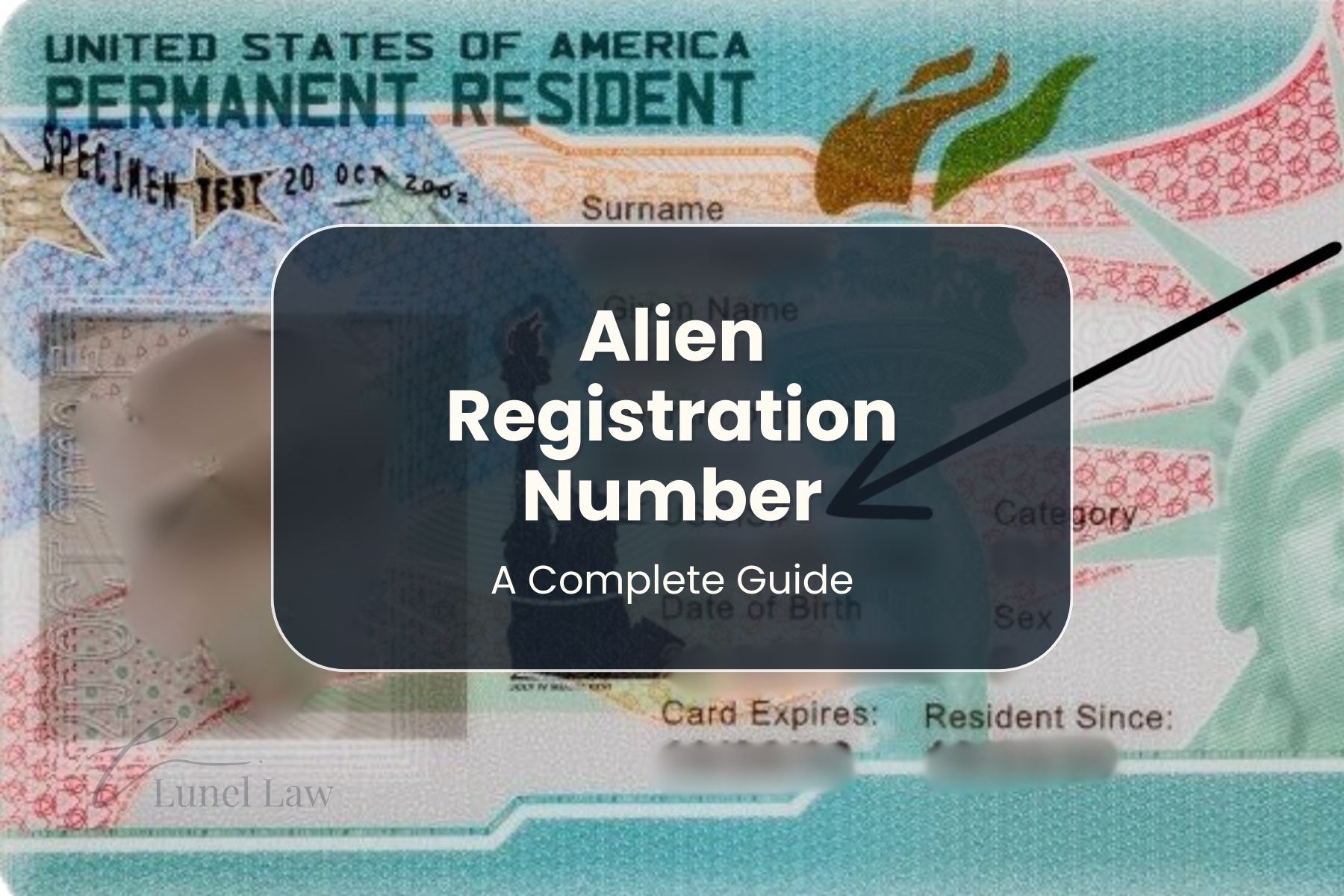
Your Alien Registration Number—often called an A-Number, USCIS Number, or A#—is one of the most critical identifiers in your U.S. immigration journey. Yet many applicants find this simple nine-digit code confusing, especially when filling out immigration forms or tracking case status.
This guide clarifies everything you need to know about your A-Number: what it is, who gets one, where to find it, and why it matters for your immigration future. Whether you’re renewing a green card, applying for work authorization, or preparing for naturalization, understanding your A-Number is essential.
Table of Contents
What Is an Alien Registration Number (A-Number)?
Your Alien Registration Number is a unique identifier assigned by the U.S. Citizenship and Immigration Services (USCIS) to noncitizens engaging with the U.S. immigration system. It is the permanent account number for your immigration history in the United States.
Key Characteristics:
- Format: The letter “A” followed by 7, 8, or 9 digits (e.g., A123456789)
- Permanence: Your A-Number never changes, even if you renew your green card, change status, or file multiple applications
- Scope: Unlike your Social Security Number (used for taxes and employment), your A-Number tracks only your immigration records across all USCIS interactions
- Issued by: U.S. Citizenship and Immigration Services (USCIS), part of the Department of Homeland Security (DHS)
Think of your A-Number as your permanent immigration passport—it connects every application, petition, notice, and benefit in one cohesive file.
The Reactivation of the Alien Registration Act: What Immigrants in the U.S. Need to Know in 2025
Who Gets an Alien Registration Number?
Not everyone who visits or works in the United States receives an A-Number. The government assigns this number only when you pursue a long-term or permanent immigration benefit.
You Likely HAVE an A-Number if You:
- Applied for or received a Green Card (Permanent Residence)
- Obtained an Employment Authorization Document (EAD) or work permit
- Applied for asylum in the United States
- Are enrolled in the DACA (Deferred Action for Childhood Arrivals) program
- Received Temporary Protected Status (TPS) or another humanitarian status
- Are in removal or deportation proceedings
- Applied for employment authorization while in F-1 student status (Optional Practical Training)
You Likely DO NOT Have an A-Number if You:
- Are a tourist on a B-1/B-2 visitor visa
- Are a student on a standard F-1 visa (unless you worked with OPT)
- Are visiting for short-term business or through the Visa Waiver Program (ESTA)
- Have only a temporary nonimmigrant visa without seeking long-term benefits
The dividing line is simple: long-term immigration benefits trigger an A-Number; temporary visits do not.
When Do You Get Your A-Number?
Timing varies depending on your immigration path:
- Green card applicants (U.S. based): About 30 days after your adjustment of status application (Form I-485) is accepted
- Green card applicants (consular interview abroad): Assigned when you attend your consular interview at the U.S. embassy or consulate
- EAD/work permit applicants: Assigned when your employment authorization request is filed, if you don’t already have one
- DACA recipients: Assigned when your initial DACA application is approved
- Asylum seekers: Assigned early in your asylum proceedings to track your case
- Removal proceedings: Assigned when immigration authorities begin deportation proceedings against you
Once assigned, you will keep the same A-Number throughout your entire immigration history, regardless of status changes.
Where to Find Your A-Number on Common Documents
Finding your A-Number is straightforward once you know what to look for. The location depends on your document type.
On Your Green Card (Permanent Resident Card)
Your green card is the easiest place to find your A-Number:
- Look for: The field labeled “USCIS #” on the front of the card
- Format: Usually nine digits starting with the letter “A” (e.g., A123456789)
- Location: Positioned near your name and photo
- Back of card: Your A-Number also appears embedded in machine-readable characters on the back
Older green cards may label it as “A#” instead of “USCIS #,” but it’s the same number.
On Your Employment Authorization Document (EAD/Work Permit)
If you have a work permit (Form I-766):
- Look for: The field labeled “USCIS #” on the front of the card
- Format: Nine digits, also starting with “A”
- Location: Near your personal details (name, date of birth, visa classification)
The placement and format are nearly identical to the green card.
On an Immigrant Visa (Visa Stamp in Your Passport)
If you obtained permanent residence through consular processing abroad:
- Look for: The field labeled “Registration Number” on your visa stamp
- Format: The number is printed on the visa page in your passport, sometimes handwritten
- Location: Usually in the top-right area or near case information on the stamp
Note: This applies only to immigrant visas (for permanent residence), not nonimmigrant visas (for temporary visits).
On USCIS Notices (Form I-797, Notices of Action)
Every official notice from USCIS includes your A-Number:
- Look for: “USCIS #” or “A#” near the top-right of the notice
- Common notices: Approval letters, receipt notices (I-797C), biometrics appointments, RFE notices
- Location: Usually prominently displayed on page one
On Immigration Court Documents
If you’ve been in removal or deportation proceedings:
- Look for: Your A-Number on all immigration court notices (Notice to Appear, master calendar hearing notices, etc.)
- Location: Typically at the top or in the case information box
On the USCIS Immigrant Fee Handout
If you completed consular processing abroad:
- When you attended your consular interview, you received an USCIS Immigrant Fee Handout
- Your A-Number is printed on this document
- You may also receive it on the Immigrant Data Summary sheet provided at your interview
A-Number vs. Green Card Number: Don’t Confuse Them
Many applicants mistakenly confuse their A-Number with their Green Card Number. These are two different numbers serving different purposes.
A-Number (USCIS #)
| Feature | Details |
|---|---|
| Format | Letter “A” + 7–9 digits (e.g., A123456789) |
| Purpose | Your permanent immigration identifier; links all your immigration records |
| Permanence | Never changes, even if you renew your green card multiple times |
| Use | Required on all USCIS forms, for case status checks, and tracking your immigration history |
| Location on card | Front of green card, labeled “USCIS #” |
| Assigned | When you begin a long-term immigration benefit process |
Green Card Number (Card # or Document #)
| Feature | Details |
|---|---|
| Format | Three letters + ten numbers (e.g., ABC1234567890) |
| Purpose | Identifies your specific physical green card document |
| Permanence | Changes each time you renew or replace your card |
| Use | Sometimes requested on renewal forms (Form I-90) or for proof of card status |
| Location on card | Front of green card, labeled “Card #” or “Document #” (usually near the bottom) |
| Assigned | When your green card is manufactured and issued |
Quick Memory Aid
Think of it this way:
- A-Number = Your permanent immigration identity (like your DNA—never changes)
- Green Card Number = Your current card’s ID (like a driver’s license—gets a new number when you renew)
Example:
- You renew your green card in 2025 (your old card expires).
- Your A-Number stays A123456789 (same forever).
- Your green card number changes from ABC1234567890 to DEF9876543210 (new card, new number).
When completing Form I-90 to renew your green card, you must provide your A-Number, not your card number.
A-Number vs. USCIS Case Number: A Critical Distinction
Another common source of confusion is the difference between your A-Number and your USCIS Case Number. Understanding this distinction is crucial for tracking your applications accurately.
A-Number (USCIS # or A#)
- Format: A + 7–9 digits (e.g., A123456789)
- Assigned to: You, the individual
- Permanence: One A-Number for life, no matter how many applications you file
- Represents: Your entire immigration history as a person
- Use: Appears on your green card, EAD, passport visas, and most USCIS correspondence
- Function: Links all your immigration records in a unified file; essential for checking your overall immigration status
USCIS Case Number
- Format: Three letters (like EAC, WAC, MSC, LIN, IOE, SRC) + ten digits (e.g., EAC1234567890)
- Assigned to: Each specific application or petition you file
- Permanence: Changes for each new form you submit; not reused after a case closes
- Represents: A single application or petition (like one green card renewal, one citizenship application, one work permit request)
- Use: Used to check the status of that specific case online at the USCIS case status tracker
- Function: Helps USCIS track where your individual application is in the processing queue
Real-World Example
Scenario: You file Form I-90 to renew your green card in January 2026, then apply for citizenship (Form N-400) in January 2029.
| Item | January 2026 (I-90) | January 2029 (N-400) |
|---|---|---|
| Your A-Number | A123456789 | A123456789 (same) |
| USCIS Case Number | EAC2601234567 | IOE2901234567 (different) |
You provide your A-Number (A123456789) on both applications because it identifies you. But each application gets its own case number for tracking that specific petition.
Why This Matters
Using the wrong number creates serious delays:
- If you enter your case number when asked for your A-Number, USCIS systems cannot match it to your immigration record
- If you use your A-Number to check case status online, the system won’t find your specific application
- Case tracking errors can cause files to be lost, missing deadlines, or notices going to the wrong person
Always double-check which number the form or system requires.
What If You’ve Lost All Your Documents? How to Retrieve Your A-Number
Life happens. Documents get lost, damaged, or destroyed. If you cannot find your A-Number anywhere, don’t panic—the government keeps records of your immigration history.
Step 1: Contact a Previous Immigration Attorney
Fastest option: If you previously worked with an immigration attorney, call their office immediately. Law firms maintain case files for years, and your A-Number is clearly documented. This often takes just a few phone calls to retrieve.
Step 2: Check Your USCIS Online Account
If you’ve created a USCIS online account (myUSCIS.gov):
- Log in to your account
- Your A-Number appears on any saved applications or notices
- You can also request a status check on pending cases, which displays your A-Number
Step 3: File a FOIA Request (Form G-639)
If the above options don’t work, use the Freedom of Information Act (FOIA) to request your immigration file:
What to do:
- Complete Form G-639 (Freedom of Information/Privacy Act Request)
- Request your complete immigration file (“A-file”) from USCIS
- Specify that you need your A-Number on the request
Filing options:
- Online (fastest): Visit www.uscis.gov/foia and file through the FIRST platform
- By mail: Send Form G-639 to:
- National Records Center (NRC)
- FOIA/PA Office
- P.O. Box 648010
- Lee’s Summit, MO 64064-8010
Processing time:
- USCIS typically sends an acknowledgment letter within 20 business days (about one month)
- Full request processing may take several weeks to several months, depending on backlog
- You’ll receive a FOIA control number to track your request status online
Cost: Most requests are provided at no cost. Requests requiring extensive copying or research may incur small fees.
Step 4: Contact USCIS Contact Center
If you need your A-Number urgently:
- Call: 1-800-375-5283 (USCIS Customer Service)
- Provide: Your name, date of birth, country of birth, and any prior case details
- Request: Your A-Number
An agent can often look up your number within minutes if you have basic biographical information.
Step 5: Schedule an In-Person Appointment
Visit your local USCIS field office to:
- Provide identification and biographical details
- Request a written confirmation of your A-Number
- Receive documentation for immediate use
When Do You Need Your A-Number?
Your A-Number is required for nearly every interaction with USCIS and federal immigration authorities. Here are common situations:
Filing New Immigration Applications
- Form I-90 (green card renewal/replacement) – required
- Form N-400 (application for citizenship/naturalization) – required
- Form I-485 (adjustment of status to permanent residence) – required
- Form I-765 (application for employment authorization/EAD) – required
- Form I-131 (application for advance parole/travel document) – required
- Form I-751 (petition to remove conditions on residence) – required
- Form I-821D (DACA renewal application) – required
- Any other USCIS petition or form addressing your immigration status
Checking Your Case Status
- Use your USCIS Case Number to track specific applications online
- Provide your A-Number when calling USCIS customer service for account inquiries
Employment Verification
- When starting a new job, you’ll need your A-Number to complete Form I-9 (Employment Eligibility Verification)
- Your employer uses your A-Number and EAD card to verify your work authorization
Requesting Immigration Records
- Filing a FOIA request (Form G-639) requires your A-Number
- Immigration attorneys need your A-Number to represent you in USCIS matters
Immigration Court Proceedings
- If you’re in removal/deportation proceedings, your A-Number appears on all immigration court documents
- You provide it when communicating with the Executive Office for Immigration Review (EOIR)
Naturalization and Citizenship
- Your A-Number links your green card history to your citizenship application (Form N-400)
- USCIS uses it to confirm continuous permanent residence before approving naturalization
DHS and State Interactions
- State agencies sometimes request your A-Number for driver’s license, in-state tuition, or public benefits
- DHS agencies (CBP, ICE, USCIS) use your A-Number across all interactions
Formatting Your A-Number Correctly on Forms
A small but important detail: USCIS forms require nine numerical digits after the “A.”
The Rule
If your A-Number has fewer than nine digits, add leading zeros after the “A” to make it nine digits total:
Examples:
| Original A-Number | Formatted for Forms |
|---|---|
| A12345678 | A012345678 |
| A1234567 | A001234567 |
| A123456 | A000123456 |
The form will typically show the blank as: A _ _ _ _ _ _ _ _ (nine blanks after the A).
A-Number and Your Immigration Journey: Critical Moments
Understanding your A-Number becomes especially important at key junctures in your immigration story:
Getting Your First Green Card
When you file Form I-485 or attend a consular interview, USCIS assigns your A-Number. You’ll receive it on your receipt notice or consular interview documents.
Next step: Write down your A-Number and store it safely.
Renewing Your Green Card
When you file Form I-90 to renew your expiring green card:
- Your A-Number remains exactly the same
- Your new green card will have a different card number but the same A-Number
- You’ll need your A-Number on the I-90 form itself
Link to resource: See Lunel Law’s comprehensive Form I-90 Explained guide for step-by-step instructions on green card renewal.
Applying for U.S. Citizenship
When you file Form N-400 for naturalization:
- Your A-Number links your green card history to your citizenship application
- USCIS verifies your continuous permanent residence using this number
Link to resource: Explore Lunel Law’s naturalization services and USCIS naturalization interview guide to prepare for your citizenship journey.
Obtaining Work Authorization (EAD)
When you apply for Form I-765 (employment authorization):
- If you don’t already have an A-Number, USCIS assigns one
- If you already have one, it appears on your new EAD card
Link to resource: Learn about employment authorization and automatic extensions at Lunel Law.
Filing for DACA or Other Protective Status
- DACA recipients: Your A-Number appears on your approval notice and Form I-765 EAD card
- TPS/Asylum recipients: Your A-Number is assigned early and used to track your case throughout proceedings
Link to resource: Lunel Law provides DACA renewal guidance and latest updates for 2025 and beyond.
Facing Removal or Deportation Proceedings
If you receive a Notice to Appear (NTA) for removal proceedings:
- Your A-Number appears on all immigration court documents
- You’ll need it to communicate with the immigration court and DHS
- Immediate legal representation is critical
Link to resource: Lunel Law offers comprehensive removal defense representation and explains how an attorney can help you fight deportation.
Common Questions About Your A-Number
Q1: Can I have more than one A-Number?
No (with extremely rare exceptions). Once USCIS assigns you an A-Number, you keep it for life. Even if your status changes (from asylum to green card, for example), you use the same A-Number.
Q2: Is my A-Number the same as my USCIS number?
Yes. “A-Number,” “USCIS Number,” and “USCIS #” are three names for the same identifier. The term depends on which document you’re looking at.
Q3: What’s the difference between my A-Number and my case number?
Your A-Number identifies you and your entire immigration history. Your case number identifies a single application. You have one A-Number for life but multiple case numbers over time (one for each application).
Q4: Do I need my A-Number to check my case status online?
No. Use your USCIS Case Number (the 13-character code starting with letters like EAC, WAC, etc.) to check your case status at uscis.gov/case-status.
Provide your A-Number when calling USCIS customer service to ask about your account in general.
Q5: What if my A-Number is on documents but I don’t have a green card yet?
This is common. USCIS assigns A-Numbers early in the process—sometimes months before your physical green card arrives. The receipt notice, approval letter, or consular interview documents will have it.
Q6: Can I choose or change my A-Number?
No. USCIS automatically assigns your A-Number based on its internal system. You cannot request a different one.
Q7: Is my A-Number confidential? Should I protect it?
Yes. Treat your A-Number like you would a Social Security Number. Don’t share it on unsecured websites or with people you don’t trust.
However, it’s not as sensitive as your SSN since it’s less tied to financial systems. Still, keep it safe and use it only on official USCIS forms and communications.
Q8: What happens if I enter the wrong A-Number on a form?
Processing delays are likely. USCIS systems may:
Fail to match the form to your existing immigration file
Return your form as incomplete
Lose track of your application
Always double-check before submitting any form.
Q9: Can my A-Number expire?
No. Your A-Number is permanent. Your green card expires (usually every 10 years), but your A-Number never does.
When you renew your green card using Form I-90, your A-Number stays the same—only your physical card is replaced.
Q10: Do I need my A-Number to travel internationally?
No, you need your green card to travel internationally (or passport + immigrant visa if outside the U.S.). However, USCIS needs your A-Number on any travel-related immigration forms (Form I-131 for advance parole).
Protecting Your A-Number: Best Practices
Once you have your A-Number, safeguard it:
- Write it down in a safe place—a locked drawer, password-protected document, or safety deposit box
- Share only with authorized persons—immigration attorneys, employers verifying I-9, or USCIS officials
- Use only on official USCIS forms and government portals
- Never provide it in emails or texts unless you initiated the contact with a verified government source
- Create copies of documents containing it—receipt notices, green card photos, EAD documentation
- Verify you’re using the correct number before submitting any form
When to Seek Professional Help
Your A-Number connects your entire U.S. immigration story. Complex situations—such as errors on documents, lost records, prior denials, or overlapping statuses—benefit from professional guidance.
Contact Lunel Law if you:
- Cannot find your A-Number and need help retrieving it
- Have received conflicting information about your A-Number on different documents
- Are filing a complex immigration application (green card, naturalization, asylum, etc.) and want to ensure the correct number is used
- Are facing removal proceedings and need to ensure your immigration record is accurate
- Are transitioning from green card to naturalization and want to verify your A-Number is correctly linked to your citizenship application
- Received a letter from USCIS with an incorrect A-Number
Lunel Law’s comprehensive services include:
- Green Card Renewal – ensuring your A-Number is correctly documented
- Family-Based Immigration – securing your A-Number during spousal or family petitions
- Naturalization – linking your A-Number to your citizenship journey
- Employment Authorization – obtaining or renewing your EAD with correct A-Number information
- DACA Services – managing your A-Number in DACA renewals
- Asylum & Refugees – protecting your A-Number through asylum proceedings
- Removal Defense – safeguarding your immigration record in deportation cases
Our multilingual team (English, French, and Spanish) serves the Atlanta area and beyond with compassionate, expert immigration counsel.
Your A-Number: The Golden Thread of Your Immigration Story
What once seemed like a confusing string of digits is now a clear, permanent identifier connecting every chapter of your U.S. immigration journey.
Your A-Number is:
- Permanent – assigned once and never changing
- Universal – used across all USCIS and DHS systems
- Essential – required for nearly every major immigration milestone
- Protective – a safeguard ensuring your records stay unified and accessible
From your first application for a green card to your final citizenship oath, your A-Number is the thread linking your entire story. Now that you understand it—where to find it, how to protect it, and when you’ll need it—you’re empowered to navigate your immigration future with confidence.
Summary & Quick Reference
| Question | Answer |
|---|---|
| What is an A-Number? | Your permanent immigration identifier assigned by USCIS; format is A + 7–9 digits |
| Who gets one? | Anyone pursuing long-term immigration benefits (green card, EAD, asylum, DACA, etc.) |
| Where is it located? | Green card: “USCIS #” on front; EAD: “USCIS #” on front; Visa: “Registration Number” on stamp; Notices: top of I-797 letters |
| How is it different from my green card number? | A-Number is permanent (never changes); card number changes with each renewal |
| How is it different from my case number? | A-Number identifies you; case number tracks a single application |
| What if I lose it? | Call previous attorney, check USCIS account, or file Form G-639 (FOIA request) |
| Do I need it for everything? | Nearly every USCIS form, employment I-9, and immigration court document |
| Can it be changed or lost? | No—it’s permanent, even if all your documents are lost |
| When do I need it most? | Green card renewal (I-90), citizenship (N-400), employment (I-9), any immigration application |
| What if it’s on my documents but seems wrong? | Contact USCIS or an immigration attorney to verify and correct |
Take the Next Step
Your A-Number is critical to your immigration success. If you have questions about your A-Number, need help with immigration applications, or want expert guidance on your next steps, contact Lunel Law today for a confidential consultation.
With over a decade of experience serving immigrants from all backgrounds, Lunel Law is your trusted partner in navigating the U.S. immigration system with clarity, confidence, and legal excellence.
Related Posts