
US Visa processing suspended for 75 countries
If you have been watching immigration news lately, you have probably felt that familiar stomach drop. Things change fast, and sometimes they change in a way that is hard to plan around.
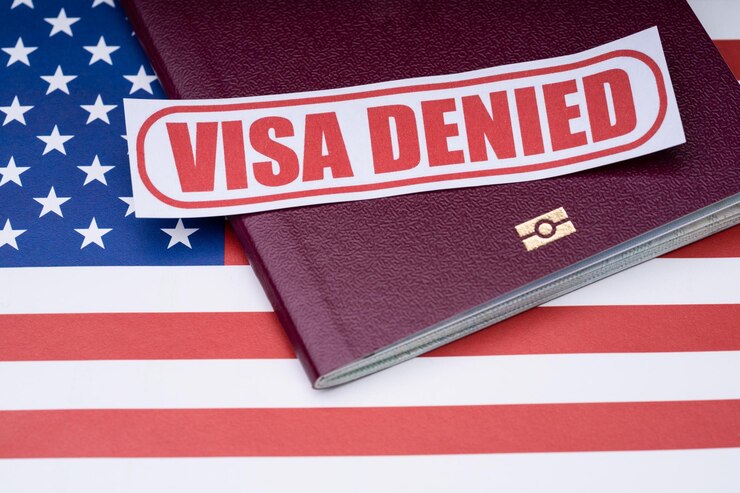
According to a State Department memo, the U.S. Department of State is pausing immigrant visa processing for nationals of 75 countries as part of a broader crackdown tied to the “public charge” ground of inadmissibility. The pause is expected to begin Jan. 21 and continue indefinitely while the department reassesses screening and vetting procedures.
This article explains what is being reported, what “public charge” means in this context, who may be affected, and what steps applicants and sponsors can take right now. Because this is developing, and because individual facts matter a lot here, you should consider speaking with an immigration attorney before making major decisions.
What is happening
The reported memo directs consular officers to:
- Pause immigrant visa processing for applicants from 75 listed countries
- Refuse visas under existing law while procedures are reassessed
- Allow very limited exceptions, generally only after an applicant has cleared public charge considerations
This matters most for people applying for immigrant visas at U.S. embassies/consulates abroad, meaning cases like:
- Family-based immigrant visas (spouse, parent, child, sibling categories)
- Employment-based immigrant visas processed through consulates
- Diversity Visa winners who process abroad (depending on how “immigrant visa processing” is applied in practice)
- Some special immigrant categories that are still “immigrant visas” by classification (though exceptions may exist)
It is also important to separate this from other processes. For example, someone applying for adjustment of status inside the U.S. (Form I-485) is handled by USCIS, not the State Department. That said, policy shifts can spill over, and public charge analysis can show up in multiple places. So you still want to pay attention even if you are not going through a consulate.
The full list of 75 countries (as reported)
The countries listed in the report are:
Afghanistan, Albania, Algeria, Antigua and Barbuda, Armenia, Azerbaijan, Bahamas, Bangladesh, Barbados, Belarus, Belize, Bhutan, Bosnia, Brazil, Burma, Cambodia, Cameroon, Cape Verde, Colombia, Cote d’Ivoire, Cuba, Democratic Republic of the Congo, Dominica, Egypt, Eritrea, Ethiopia, Fiji, Gambia, Georgia, Ghana, Grenada, Guatemala, Guinea, Haiti, Iran, Iraq, Jamaica, Jordan, Kazakhstan, Kosovo, Kuwait, Kyrgyzstan, Laos, Lebanon, Liberia, Libya, Macedonia, Moldova, Mongolia, Montenegro, Morocco, Nepal, Nicaragua, Nigeria, Pakistan, Republic of the Congo, Russia, Rwanda, Saint Kitts and Nevis, Saint Lucia, Saint Vincent and the Grenadines, Senegal, Sierra Leone, Somalia, South Sudan, Sudan, Syria, Tanzania, Thailand, Togo, Tunisia, Uganda, Uruguay, Uzbekistan, and Yemen.
If you are from one of these countries, or you are sponsoring someone from one of these countries, the practical question becomes: is your case likely to be paused, delayed, or newly scrutinized for public charge concerns.
“Public charge” is the key term here, and it is easy to misunderstand
“Public charge” is a long-standing concept in U.S. immigration law. The Immigration and Nationality Act allows an officer to find an applicant inadmissible if they are likely to become primarily dependent on the U.S. government for support.
It sounds simple until you get into it.
Public charge decisions are typically based on a “totality of the circumstances” review. The memo described in the report indicates that officers will weigh a wide range of factors, such as:
- Health and medical conditions, including potential need for long-term care
- Age
- Financial resources and income
- Education and skills
- English proficiency
- Family circumstances
- Past use of certain government benefits (where applicable)
- History of institutionalization or long-term care
The reporting also mentions heightened attention to some applicant traits, including older applicants or those with health-related concerns that could predict future public assistance use. (This is exactly the kind of area where you want legal guidance, because what is “predictive,” what is “allowed,” and what evidence is appropriate can get messy fast.)
One more detail people miss: enforcement changes over time
The “public charge” ground has existed for decades, but how aggressively it is applied has changed across administrations. The report contrasts prior approaches, including the narrower 2022 framework that generally focused on cash assistance and long-term institutional care and excluded programs like SNAP, WIC, Medicaid (in many circumstances), and housing vouchers, versus broader approaches in earlier years that expanded what benefits and indicators could be considered.
So even if you think you understand public charge based on what happened in a prior year, you may be working off an outdated playbook.
Why 75 countries, and why now
The report frames this as a State Department effort to tighten screening for applicants deemed likely to become a public charge, and it links the timing and focus to fraud and benefit abuse concerns in certain contexts.
For example, Somalia is discussed as receiving heightened scrutiny following a high-profile fraud scandal centered in Minnesota involving alleged abuse of taxpayer-funded programs, with reporting noting that many individuals involved were Somali nationals or Somali-Americans. Whether that is a fair or complete characterization is not something a law firm blog should try to litigate in a blog post. What matters for applicants is that a country can become a “high scrutiny” country quickly, and then the ripple effects reach ordinary families who had nothing to do with any scandal.
Who might be affected most
Even though the announcement is framed broadly, the impact tends to concentrate in predictable places.
1) Family-based immigrant visa applicants processing abroad
This includes spouses and children of U.S. citizens and permanent residents, and other family preference categories. Many of these cases depend heavily on the Affidavit of Support (Form I-864) from a sponsor. If public charge scrutiny increases, the strength of the I-864 and the sponsor’s financial evidence may matter even more than usual.
2) Employment-based immigrant visa applicants at consulates
Some employment categories will already have job offers and wage details, which can help, but officers can still look at the whole picture. If a spouse or dependent has health issues, or if household finances are borderline, the case can get complicated.
3) Applicants with medical complexity
If you have a medical condition that could require significant long-term care, you should assume this will be looked at carefully. That does not mean the case is impossible. It means the evidence has to be prepared carefully and presented clearly, ideally with legal strategy behind it.
4) Applicants with weak or inconsistent documentation
If your case file is thin, inconsistent, or full of gaps, a stricter environment is not your friend. Officers have discretion, and in a heightened scrutiny environment, “close calls” often go the wrong direction.
5) Cases already stuck in administrative processing
Some applicants are already in 221(g) administrative processing. A new pause and reassessment period can make timelines even harder to predict.
How a law firm can help without overpromising
This kind of policy shift is exactly where competent legal support helps, but it is also where it is easy for people to get sold false certainty. A responsible immigration lawyer cannot “guarantee” an approval. Consular processing involves discretion, and policy can change mid-stream.
What an immigration lawyer can do is reduce risk, reduce chaos, and improve the way your case is presented:
- Review your file for public charge vulnerabilities
- Strengthen your Affidavit of Support presentation
- Prepare you for interview questions that tend to trigger public charge concerns
- Help correct inconsistencies before they become credibility problems
- Advise on timing issues, including document renewals
- Develop a response strategy if you receive a refusal or 221(g)
That is not flashy. It is just the work that gets cases through in a stricter environment.