
US State dept pauses immigrant visa interviews worldwide: Who is affected
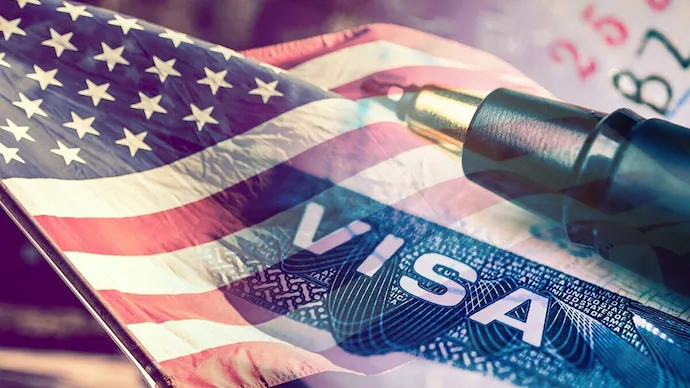
US Department of State has begun postponing immigrant visa interviews at US embassies and consulates worldwide. The Department has described the change as a temporary adjustment to consular appointment schedules to allow “in depth training” for consular officers, focused on applying the government’s screening requirements consistently, including assessment of whether an applicant is likely to become dependent on public assistance.
Public statements to date do not clearly establish that all immigrant visa processing has stopped everywhere. What is clear is that interview calendars are being disrupted at some posts, with applicants receiving cancellation emails and being told new interview dates will be provided later.
What exactly is being paused
The disruption concerns in person immigrant visa interviews conducted at US embassies and consulates abroad. Immigrant visas are the pathway for individuals outside the United States to enter the US as lawful permanent residents (green card holders). For most immigrant visa categories processed abroad, a consular interview is required near the end of the case.
According to reporting, the State Department introduced a training initiative across US diplomatic posts in early August. Interview schedules were adjusted to free time for officer training. A Department spokesperson told Reuters that visa service appointments would be changed during the initiative, and the program is intended to help officers assess applicants comprehensively and apply screening requirements consistently.
Some applicants with interviews already scheduled have reportedly received emails stating the appointment was canceled and will be rescheduled, with no firm timeframe provided.
Who is affected (and who is most exposed)
Applicants applying for immigrant visas outside the United States
The group most directly affected is individuals who must complete consular processing abroad, including:
- Immediate relatives of US citizens (spouses, unmarried children under 21, parents of adult US citizens)
- Family sponsored preference categories (adult children of US citizens, spouses and children of permanent residents, siblings of US citizens)
- Employment based immigrants sponsored for permanent residence through an employer
- Diversity Visa (DV) lottery winners
- Certain special immigrant categories that process through consular posts (case dependent)
Because the interview is typically the last major step before visa issuance, postponement at this stage can have outsized effects. Many applicants have already completed document collection, paid fees, obtained police certificates, scheduled medical exams, and arranged travel around the assigned interview date.
Applicants whose cases are already “documentarily qualified” and interview ready
The clearest impact is on cases that have already moved through the National Visa Center (NVC) and are awaiting interview, or that had interviews already scheduled. These cases are vulnerable to sudden calendar changes because the consular post controls appointment availability.
Family based cases facing separation timelines
For immediate relatives and other family categories, rescheduling can mean longer family separation. This is especially acute where children approach age related eligibility thresholds, or where families have synchronized relocations around school years, caregiving needs, or expiring documents.
Employment based cases with fixed start dates
Employment based immigrants often coordinate relocation, lease termination, school enrollment, and job start dates based on expected visa issuance. If interviews are canceled with no replacement date, employers and employees may have to revise onboarding timelines, manage work authorization constraints abroad, and extend international assignments.
Diversity Visa applicants facing statutory deadlines
DV cases carry a unique risk: visa issuance is tied to the fiscal year. If a DV applicant cannot obtain an interview and visa issuance before the deadline applicable to that DV year, eligibility can be lost, even if the applicant completed every step on time. Any widespread interview compression increases this risk.
What is not yet clear
Despite descriptions of a “worldwide pause” in reporting, the State Department has not publicly provided details on:
- The number of interviews postponed
- Which posts are canceling appointments
- How long the training adjustments will last
- Whether all immigrant visa categories are equally affected at each post
- Whether NVC will continue forwarding cases at the same pace
- Whether earlier processing steps continue uninterrupted while interviews are delayed
It also remains unclear whether the adjustment affects nonimmigrant visa interviews (such as B visitor, F student, or H 1B visas). Public reporting and Department comments have focused on immigrant visa services, but the absence of a detailed operational notice leaves uncertainty.
Why the State Department is doing this: public charge screening and retraining
The Department has framed the training around consistent application of screening requirements. A central theme in the public reporting is renewed focus on the legal concept of public charge.
Under US immigration law, a consular officer may deny a visa if an applicant is likely to become a public charge. The Immigration and Nationality Act requires a totality of the circumstances review that considers factors including:
- Age
- Health
- Family status and household circumstances
- Assets, resources, and financial status
- Education and skills
The public charge determination is not supposed to turn on a single metric. Officers may also consider past or current use of certain US public benefits, and the Department has defined “public charge” dependence as primarily relying on government support for subsistence, including cash assistance for income maintenance or long term institutionalization at government expense.
For family sponsored cases, an Affidavit of Support (Form I 864) from a qualifying sponsor is usually required. However, the Affidavit of Support does not automatically resolve every public charge issue in the Department’s framework, and officers may scrutinize the broader financial picture.
Practical consequences for pending immigrant visa cases
Even a temporary interview slowdown can create compounding delays because consular sections operate with limited interview slots, staffing constraints, and varying local conditions. When interviews are canceled and rebooked later, posts often have to rebalance priorities across:
- Immediate relative cases
- Time sensitive categories (including DV)
- Expedite requests
- Medical exam validity windows
- Security and administrative processing capacity
For many applicants, the financial impact is not limited to travel changes. Medical examinations may need to be repeated if they expire before visa issuance. Police certificates can also age out depending on the jurisdiction and case facts. Employment and housing plans may need to be reworked. In family cases, extended separation can carry real caregiving and schooling consequences.
Which stages of the process likely continue
Based on the limited public information, it cannot be assumed that the government has stopped all immigrant visa processing globally. Generally, immigrant visa processing includes multiple separate workstreams:
- USCIS petition adjudication (for categories requiring petitions)
- NVC fee collection and document review
- Consular post interview scheduling and interviewing
- Administrative processing and final visa issuance
The reported measure is specifically tied to consular appointment schedules and officer training. Unless a post announces otherwise, earlier steps may still move forward, but cases can bottleneck at the interview stage if appointment capacity is reduced.
Key takeaway: a global interview disruption with uneven, post-by-post effects
At this stage, the most accurate description is not a single uniform shutdown, but a worldwide scheduling disruption driven by a Department wide training initiative, with the severity depending on each consular post’s ability to restore interview calendars.
The highest risk groups include applicants already scheduled for interviews who receive cancellations, DV applicants facing fixed statutory deadlines, and employment and family cases with time sensitive relocation or separation pressures. Further clarity will depend on post specific scheduling practices and any additional State Department guidance about the duration and scope of the appointment adjustments.