
The New H-2A Framework: Fewer Barriers, More Workers, and What You Need to Know
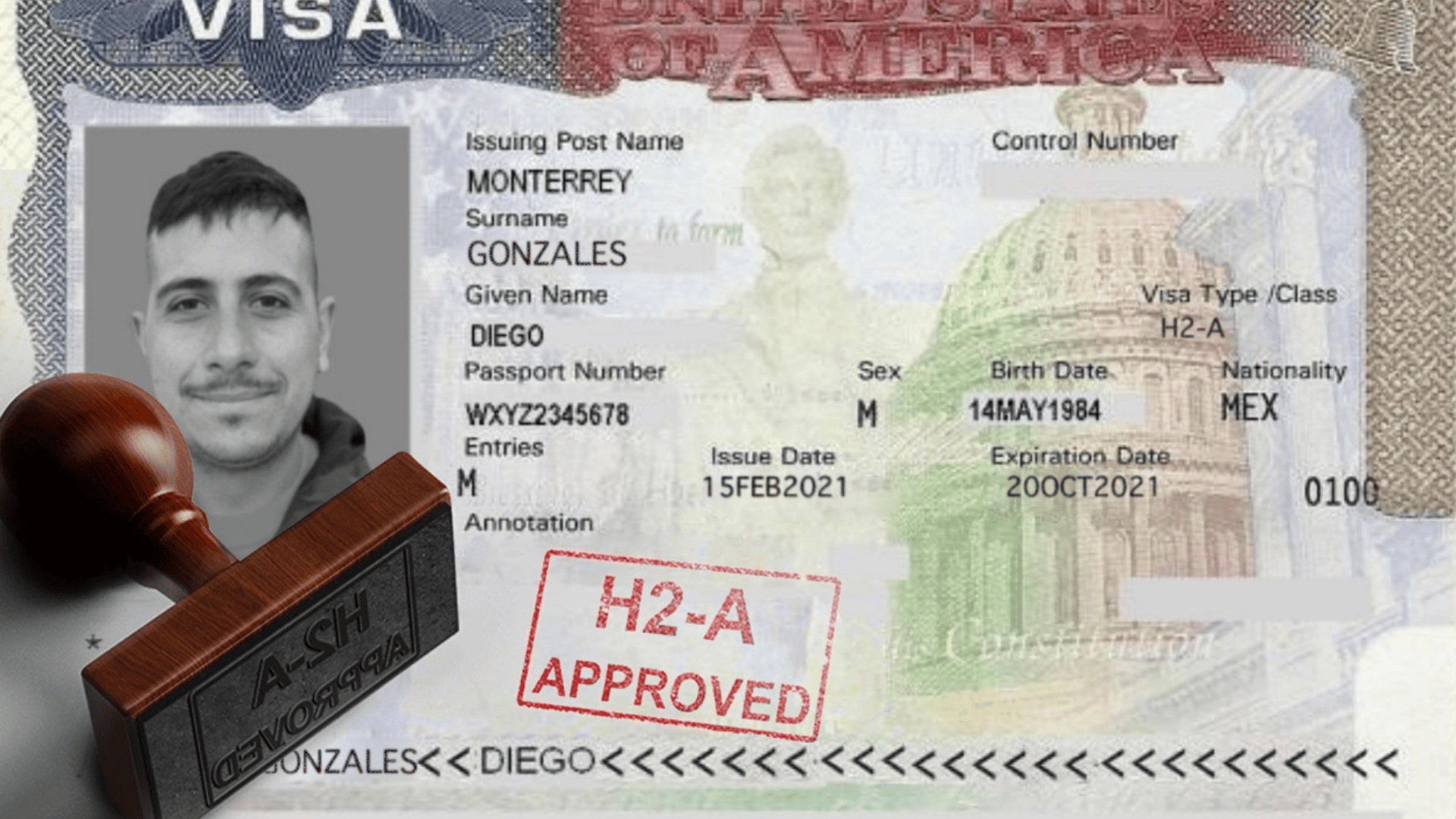
The H-2A visa program enables U.S. employers to temporarily hire foreign agricultural workers when there are insufficient U.S. workers available for seasonal or temporary agricultural jobs. Managed through a collaboration between the U.S. Department of Labor (DOL) and U.S. Citizenship and Immigration Services (USCIS), this program ensures agricultural labor needs are met while protecting the rights and wages of U.S. workers.
What is the H-2A Visa Program?
The H-2A program allows U.S. employers or their agents to petition USCIS via Form I-129 for permission to bring foreign nationals into the United States to perform temporary agricultural work. USCIS adjudicates these petitions based on evidence including a valid Temporary Labor Certification (TLC) issued by DOL, which confirms that no qualified U.S. workers are available and hiring foreign workers will not adversely affect wages or working conditions.
Core eligibility requirements for H-2A classification
To qualify for H-2A nonimmigrant classification, the petition must be built around the required statutory and regulatory showings, including:
- A temporary or seasonal agricultural job opportunity.
- Insufficient U.S. workers who are able, willing, qualified, and available.
- Employment of H-2A workers will not adversely affect the wages and working conditions of similarly employed U.S. workers.
- A valid temporary labor certification (TLC) from the U.S. Department of Labor (DOL) must be submitted with the H-2A petition as initial evidence.
That sequencing matters. DOL is where the labor market test and job terms are vetted. USCIS adjudicates whether the petition meets H-2A classification requirements, including whether the TLC and petition evidence support the request.
The TLC first approach (standard sequencing)
In the standard process:
- The petitioner submits the TLC application to DOL.
- After DOL issues an approved TLC, the petitioner files Form I-129 with USCIS.
- The original TLC is generally included as initial evidence with the H-2A petition.
Once USCIS approves the H-2A petition, the worker proceeds with consular visa processing and/or admission steps (DOS/CBP), depending on location and circumstances.
Alternative filing approach (electronic filing after DOL Notice of Acceptance)
There is also an alternative path referenced in USCIS guidance:
- The petitioner may file Form I-129H2A with USCIS after receiving a DOL Notice of Acceptance, and then wait for the approved TLC before filing the H-2A petition electronically.
This can support planning and sequencing in high volume seasons, but it still hinges on the TLC being approved, and the petition record being complete and consistent across DOL and USCIS filings.
Major Changes Under the Trump Administration – February 2026 Update
The “new H-2A framework” rolled out in February 2026 is not a rewrite of the H-2A statute. It is a set of Trump administration actions that sit on top of the existing program and aim to make the pipeline move faster, with fewer intake snags, while keeping the sharper compliance tools that came online in the January 17, 2025 regulatory baseline.
At a high level, February 2026 is centered on three things.
First, faster intake. More standardized filing expectations, fewer avoidable rejections, and clearer handoffs between agencies so a case does not stall for preventable reasons.
Second, broader worker access pathways. More predictable sequencing for workers moving from petition approval to visa issuance to admission, and more consistent use of channels that reduce administrative back and forth.
Third, tighter compliance guardrails. The posture is basically: streamlined processing is available, but violations around prohibited fees and serious labor law issues can still trigger denial, revocation, and downstream shutdown of visa and entry.
Anchor point for the comparison:
- January 17, 2025 baseline: the regulatory posture emphasized program integrity, including USCIS authority to deny certain H-2A petitions based on serious labor law violations or H-2A program requirement violations by the petitioner, predecessor, or related entities, depending on the nature of the violation(s). It also reinforced prohibited fee rules as a denial and revocation driver.
- February 2026 actions: implementation guidance, interagency coordination, and processing changes focused on lowering friction in the intake and sequencing steps across DOL, USCIS, DOS, and CBP. Think operational mechanics and standardization, not a new legal category.
What did not change (and still controls the program):
- H-2A is still for temporary or seasonal agricultural need.
- A temporary labor certification (TLC) from the U.S. Department of Labor (DOL) is still required before USCIS petition approval.
- USCIS still adjudicates the petition under the H classification framework (including the H-2A-specific requirements) and can deny or revoke based on eligibility failures or integrity findings.
- A visa (if required) and admission at the border remain separate steps. Approval is not the finish line.
Agencies involved in the end to end pipeline:
- DOL: receives and adjudicates the TLC. This is the foundation for everything downstream.
- USCIS: adjudicates Form I-129 for H-2A classification using the approved TLC as initial evidence.
- DOS (Department of State): issues the H-2A visa at a U.S. consulate abroad (when a visa is required).
- CBP (Customs and Border Protection): makes the admission decision at the port of entry (or handles direct admission requests where a visa is not required).
How These Changes Impact Employers and Workers
The updated framework incentivizes compliance through tighter controls while expanding opportunities for foreign agricultural workers by increasing visa availability.
Employers benefit from:
- Faster processing enabling timely hiring during peak seasons.
- Clearer guidance on prohibited fees and notification requirements reducing legal risk.
- Enhanced ability to plan workforce needs via alternative filing methods.
Workers gain from:
- Protections against wage suppression due to enforced labor standards.
- Assurance that employers comply with fee restrictions safeguarding them from exploitation.
How a law firm can help under the new framework
The new rules reward clean documentation, consistent filings across DOL and USCIS, and a compliance posture that is provable, not implied. Common law firm support includes:
- End to end filing management, aligning TLC terms and the I-129 petition record so that job terms, period of need, worksite details, and worker lists match cleanly.
- Risk screening for denial authority factors effective January 17, 2025, including reviewing whether any criminal, administrative, or judicial outcomes tied to relevant individuals may be attributed to the petitioner or a successor in interest under 8 CFR 214.2(h)(10)(iv) and (C).
- Petition structuring for large crews, multiple arrivals, and the 25 named worker limit per petition tied to a single TLC, including the required multiple petition attachments.
- Tracking and notification systems to meet the 2-workday reporting rule, and preparing the notification content so the submission is complete, consistent, and defensible.
- Maximum stay and return planning, including analyzing time in other H or L classifications and documenting 60-day qualifying absences to support resets where applicable.
- Response strategy for RFEs/NOIDs, follow up after 15 days without action when appropriate, and escalation channels for H-2A petition concerns using USCIS provided contacts.
This is the direction the program is moving: fewer procedural surprises if the record is tight, and sharper consequences where compliance is weak. For employers and agents, the most practical approach is to treat H-2A as a compliance system that happens to produce workers, not the other way around.