
Temporary Increase in H-2B Nonimmigrant Visas for FY 2026
If your business relies on seasonal labor, you probably already know the feeling. You do everything “right” on the front end, you plan months ahead, you line up contracts, you start recruiting. And then the H-2B cap hits and suddenly you are staring at a calendar that does not care about federal quotas.
For FY 2026, DHS and DOL are trying to relieve some of that pressure, at least temporarily.
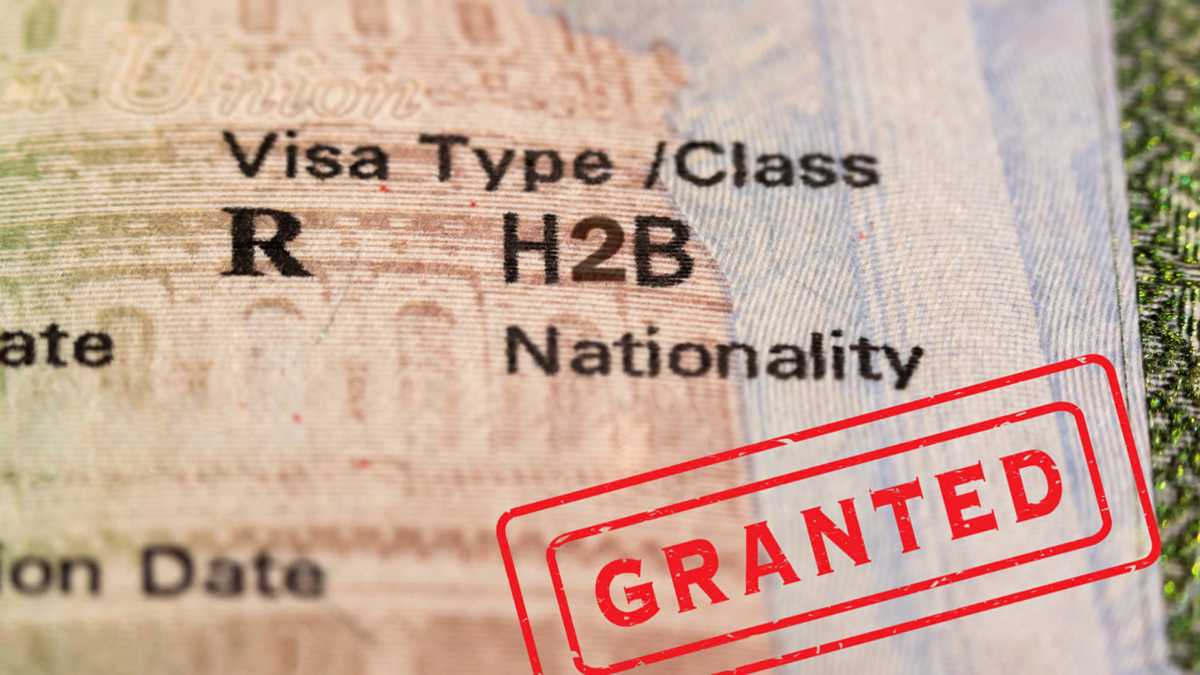
They announced a temporary increase to the H-2B nonimmigrant visa cap by up to 64,716 additional visas for FY 2026. The key phrase there is “up to”, because these are not automatic. They are supplemental visas available only under specific conditions, mainly for U.S. businesses that can show they will suffer irreparable harm without the requested workers.
This article breaks down what the increase is, how the allocations work, who qualifies, what filings must include, and the main compliance and timing traps we are already seeing employers run into.
64,716 additional H-2B visas for FY 2026
DHS, in consultation with DOL, increased the H-2B cap for FY 2026 by 64,716. This increase is based on time-limited statutory authority under the Continuing Appropriations Act, 2026. So this is not a permanent expansion of the program. It is a one-year, rule-based bump.
DHS has also been clear about the rationale. The Secretary of Homeland Security considered:
- business needs
- the impact on U.S. workers
- H-2B program integrity
That balancing language matters, because it shows the government is positioning this as targeted relief, not a broad opening of the gate.
Who are the supplemental visas for?
These visas are for U.S. businesses that are suffering, or will suffer, irreparable harm if they cannot hire the requested H-2B workers.
In plain terms, the government is asking employers to prove something more than inconvenience and more than “we are short staffed.” The idea is that without these workers, the business will face serious damage. Think lost contracts, inability to open for the season, collapse of service capacity, major financial losses that cannot realistically be fixed later.
To access the supplemental numbers, petitioners must still meet existing H-2B eligibility requirements. The supplemental rule is not a shortcut around the normal H-2B process. It is an additional layer on top of it.
How the 64,716 visas are split up (the three allocations)
The supplemental visas are distributed in three separate allocations, tied to employment start dates. This matters because you cannot just pick any start date and hope it lands in the bucket you want. USCIS will compare your H-2B petition start date to the dates authorized on the Temporary Labor Certification (TLC), and misalignment is one of the fastest ways to get rejected.
Here are the FY 2026 supplemental allocations:
1) Start dates Jan. 1 to March 31, 2026: 18,490 visas
This allocation is for employers with employment start dates falling between January 1 and March 31, 2026.
2) Start dates April 1 to April 30, 2026: 27,736 visas
This is a narrower start-date window, just the month of April. But it is also the largest of the three allocations.
3) Start dates May 1 to Sept. 30, 2026: 18,490 visas
This one is framed around late-season needs, with employment start dates between May 1 and September 30, 2026.
If you add them up, that gets you to the total: 18,490 + 27,736 + 18,490 = 64,716.
The new attestation form and why expired versions will be rejected
To request workers under the FY 2026 supplemental allocations, petitioners must submit an attestation on DOL Form ETA 9142-B-CAA-10.
Some practical, easy-to-miss points:
- Expired ETA forms are not accepted.
- The form is specifically tied to seeking H-2B workers under the FY 2026 supplemental allocation.
- The form requires you to indicate the requested supplemental visa allocation for the H-2B workers.
If your filing package includes an outdated version of the form, you should assume the petition will be rejected, not “fixed later.” A lot of employers learn this lesson the hard way.
Filing logistics: USCIS lockbox and the attention line requirement
Petitions must be filed at USCIS lockbox facilities and must include the specific attention line required for this supplemental process.
USCIS has also flagged the consequence if you file at the wrong location:
- petitions filed at a non-current location may be rejected
- filing fees may be returned
This creates a timing problem because H-2B filings are already a race. A rejection for incorrect filing location can cost you weeks, and by the time you re-file, the relevant allocation could be close to filled.
So yes, this is boring administrative stuff. But it is the boring stuff that decides whether your case even gets through the door.
Start dates must match the TLC, exactly
The rule states that an H-2B petition’s employment start date must match the TLC’s authorized start date.
This requirement is deceptively strict. Employers sometimes try to “nudge” dates to fit a cap window or to align with business reality. USCIS is saying, do not do that here. If the petition and TLC do not match, you are setting yourself up for rejection.
If your operational need has changed since the TLC was issued, talk to counsel about whether a new TLC or other strategy is needed. Do not just edit the I-129 start date and hope it slides through.
Unnamed workers, returning worker rules, and what that really means
The supplemental visa allocation allows employers to request unnamed workers, but those requests can still be subject to the returning worker requirement (depending on which allocation you are using).
This is another spot where employers get tripped up. “Unnamed” does not mean “unrestricted.” It just means you can file without listing specific beneficiary names at the time of filing, if permitted. But if the allocation is reserved for returning workers, the workers who ultimately fill those slots must meet the returning worker definition.
That means your recruiting and staffing partners abroad need to understand the category you are filing under. Otherwise you get a petition approved in theory, then you cannot actually staff it with eligible workers in practice.
Change of status requests: a specific warning
The background guidance notes: denial of change of status request but adjudication for H-2B classification eligibility.
In other words, USCIS may decide a worker qualifies for H-2B classification, but still deny a request to change status inside the United States, meaning the worker would need to obtain the H-2B visa abroad and enter properly.
So if you are planning for workers already in the U.S. in another status, and you are hoping to flip them into H-2B without travel, you need to plan for the possibility USCIS says no to the change of status portion.
This is not theoretical. It affects start dates, onboarding, and whether your staffing plan collapses mid-season.
What happens after approval: consular processing and entry
Even when a petition is approved, the worker generally must:
- obtain an H-2B visa at a U.S. consular post abroad, and then
- seek admission in H-2B status at a U.S. port of entry
Employers sometimes treat approval as the finish line. It is not. Consular scheduling, administrative processing, and port of entry issues can all cause delays. Build that into your operational timeline, especially if you are already trying to catch up after the cap was reached.
Final filing deadlines and what happens if you miss them
There are two timing rules you should have circled in red.
USCIS stops accepting petitions after Sept. 15, 2026
USCIS will stop accepting petitions after September 15, 2026, which is described as the final filing date, or earlier if an allocation cap is reached.
So even if your need is real and your harm is real, if you file too late, the door closes.
Pending petitions after Oct. 1, 2026 may be denied without a fee refund
The guidance also states USCIS will deny pending petitions after October 1, 2026 without a fee refund.
That is harsh, and you should take it literally. If you file late and your case is still pending past that date, you could lose the fees and still not get the workers.
If the start date is after Sept. 30, 2026, it counts toward FY 2027
Another detail that matters for planning:
- petitions requesting an employment start date after September 30, 2026 will be considered toward the FY 2027 H-2B cap
So if your season actually begins in October, you are not in the FY 2026 supplemental world anymore. You are playing in FY 2027, with whatever cap and supplemental rules apply then.
This comes up a lot in hospitality, resorts, certain outdoor recreation operations, and late-harvest agricultural-adjacent services that are not H-2A. Employers sometimes assume “late season” includes October. In this rule, it does not.
Common rejection reasons we are watching for
Based on the rule requirements, these are some of the biggest avoidable problems:
- filing at the wrong USCIS location or without the required attention line
- using an expired version of ETA 9142-B-CAA-10
- failing to include the required attestation at all
- petition start date not matching the TLC start date
- requesting the wrong supplemental allocation category on the form
- misunderstanding returning worker requirements when requesting unnamed workers
- filing too late and running into the Sept. 15 cutoff or an allocation cap being reached
And just to be clear, the guidance indicates rejection of petitions without required attestation. That is not “Request for Evidence.” That is send it back.
Practical takeaways for employers thinking about the FY 2026 supplemental cap
If you are deciding whether to pursue these supplemental H-2B visas, here is the short version. Not the marketing version, the real version.
- Do not treat the supplemental cap like a lottery ticket. You need a real irreparable harm story, backed by documents, and you need to retain that evidence.
- Pick the correct allocation based on your start date, and make sure the petition start date matches the TLC. No improvising.
- Use the correct DOL attestation form (ETA 9142-B-CAA-10) and make sure it is the current version. Expired forms are not accepted.
- File exactly where USCIS requires, with the correct attention line, or you risk a rejection that costs you the season.
- Plan for consular processing and travel, especially if you were hoping for change of status. The guidance signals USCIS may deny COS even if the worker otherwise qualifies.
- File early. The allocations can fill, and there is a hard stop after Sept. 15, 2026. Plus the Oct. 1, 2026 pending denial risk is very real.
How our office can help
For many employers, the supplemental H-2B increase for FY 2026 is genuinely helpful. But the process is also more technical than it looks, and the filings are less forgiving than people expect.
We help employers evaluate eligibility, match the correct supplemental allocation to the TLC and start date, prepare the irreparable harm narrative and documentation plan, complete the required attestation, and file the petition correctly at the USCIS lockbox. We also help build the back-end compliance file, so if DHS or DOL asks questions later, you are not scrambling.
If you want us to review your H-2B strategy for FY 2026, including whether the supplemental allocations make sense for your seasonal timeline, contact our office.