

The Best Cities in the United States for Immigrants in 2026
In 2026, the United States is still full of opportunity for immigrants, but the rules to live, work and stay here lawfully are stricter, more complex, and more expensive than they have been in decades. Where you choose to live is no longer just about jobs and cost of living; it’s also about enforcement, detention risks, and how easily you can access experienced immigration counsel. Understanding the best cities for immigrants is crucial in this environment.
Your Choice of City Matters More Than Ever for Immigrants in 2026
For immigrants and families considering or already living in Atlanta, Georgia, Lunel Law offers dedicated, full‑service immigration representation to help you stay safe, compliant, and in status in this new environment. [lunellaw]
Table of Contents
The 2026 Immigration Landscape: Tougher Rules, Higher Stakes
Over the past two years, sweeping federal changes have reshaped the immigration system, emphasizing enforcement and tightening access to benefits and legal relief. [en.wikipedia]
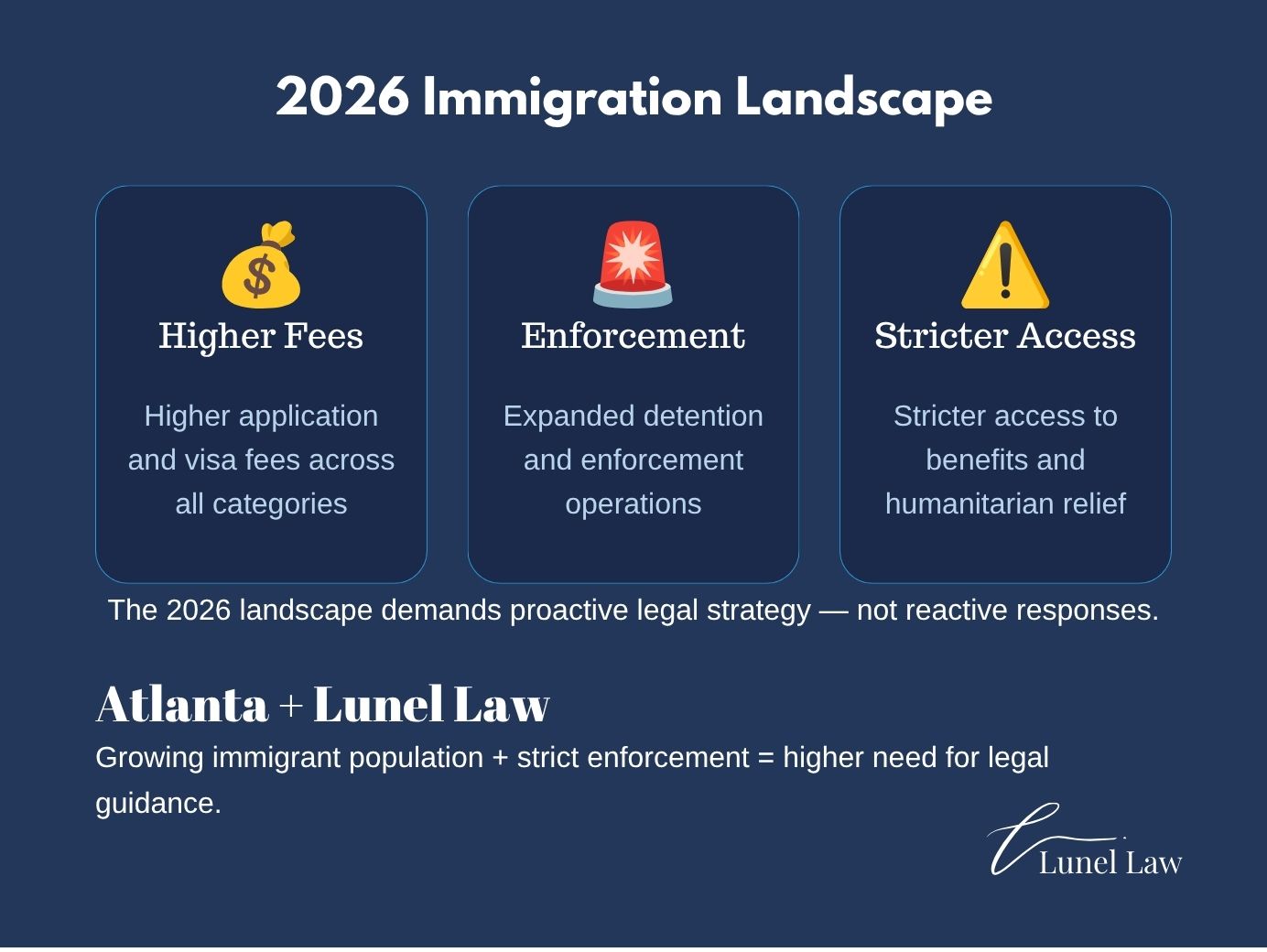
Key trends in 2025–2026 include:
Identifying the best cities for immigrants can significantly impact your experience and opportunities in the United States.
- Higher application and visa fees. New laws and regulations have increased costs for family‑based green cards, work permits, and various immigration benefits, creating a heavier financial burden for many families. [casaislaw][youtube]
- Expanded detention and enforcement. The Laken Riley Act, signed in January 2025, requires the detention of certain undocumented immigrants who are arrested or charged with crimes like theft, burglary, and similar offenses, significantly widening the detention net. [en.wikipedia]
- Stricter eligibility for benefits. Changes limit access to programs such as Medicaid and SNAP for many non‑citizens, and some Temporary Protected Status (TPS) and asylum policies are under review or being narrowed. [uscis]
- Increased security and vetting. Travel bans, social‑media vetting and enhanced background checks make many visa categories more complex and time‑sensitive. [youtube][usahello]
These shifts mean immigrants must think strategically not only about which city offers opportunity, but also about where they can best manage legal risk and secure strong representation.
Choosing a City in 2026: Beyond Jobs and Housing
Historically, immigrants have gravitated to large metros for employment, diversity and community support: cities like New York, Los Angeles, Houston, Miami, Chicago, Seattle, Atlanta, Denver, San Jose and Phoenix. Those strengths still matter, but in 2026 you should also weigh three legal and compliance factors:[nytimes]
- Local enforcement climate. States and cities differ in how closely police cooperate with federal immigration authorities, which can affect detention and removal risks after any arrest, however minor. [cnn]
- Availability of legal help. Access to experienced immigration attorneys and reputable legal‑aid organizations can make the difference between losing status and securing long‑term protection. [lunellaw]
- Complexity of your case. Asylum, TPS, family‑based petitions, employment visas and removal defense each have different risk profiles; the right city for you depends on your current status and long‑term goals. [usahello]
The table below gives a 2026‑specific, compliance‑aware overview of these key cities.
2026 Snapshot: Major U.S. Cities for Immigrants Through a Legal Lens
| City | 2026 strengths for immigrants | Key legal/compliance concerns |
|---|---|---|
| New York City | Long‑standing immigrant hubs, extensive legal‑aid ecosystem, city agencies focused on immigrant inclusion. [nytimes] | Reduced new international migration due to stricter national policies; complex asylum and TPS issues require legal guidance. [nytimes] |
| Los Angeles | Strong immigrant‑serving organizations, diverse communities, long experience with mixed‑status families. [dornsife.usc] | High housing costs plus state and federal policy shifts; enforcement actions can impact undocumented and mixed‑status households. [dornsife.usc] |
| Houston | Relatively lower cost of living, large Latino community and jobs in energy, healthcare, technology. [conference-board] | Texas’ enforcement posture and cooperation with ICE can heighten detention and removal risks for those without secure status. [about.bgov] |
| Miami | Gateway to Latin America, many Spanish‑language resources, active immigrant‑rights groups. [conference-board] | Competitive job market and high housing costs; evolving asylum and TPS rules are critical for Caribbean and Latin American arrivals. [usahello] |
| Chicago | Long history of immigration and community organizing; relatively affordable large‑city housing. [conference-board] | Navigating changing federal rules on work permits, benefits and detention requires careful legal strategy. [usahello] |
| Seattle | Tech opportunities, high salaries, supportive civic culture for immigrants. [conference-board] | Very high living costs; stricter evidence standards for tech‑related employment visas and green cards increase documentation burden. [casaislaw] |
| Atlanta | Strong economy, growing and diverse immigrant population, emerging gateway city. [ajc] | Georgia enforcement laws plus federal detention rules (Laken Riley Act) create serious risks if status or criminal history is not carefully managed, with legal counsel essential. [cnn] |
| Denver | Job growth in healthcare, tech, education; relatively safe environment. [conference-board] | Rising housing costs; vulnerable immigrants need legal advice to respond to national changes on asylum, TPS and public benefits. [usahello] |
| San Jose | Heart of Silicon Valley, high salaries in tech, strong diversity. [conference-board] | Extremely high costs and stricter employment‑based green card criteria; any status lapse can be costly without proactive legal strategy. [casaislaw] |
| Phoenix | More affordable cost of living, steady job growth in construction, healthcare and services. [conference-board] | Heat‑related challenges and conservative enforcement climate; mixed‑status families should plan carefully with immigration lawyers. [brookings] |
Atlanta stands out here as both a city of opportunity and a place where enforcement and detention rules are especially important to navigate correctly.
Atlanta in 2026: Opportunity and Enforcement Side by Side
Metro Atlanta has become one of the country’s major destinations for immigrants, with roughly 850,000–1,000,000 foreign‑born residents, about 15–16% of the region’s population. Immigrants make up nearly 19% of the local workforce and are especially active in construction, manufacturing, business services, hospitality, agriculture and STEM fields. [fwd]
At the same time, Georgia’s state‑level enforcement law (HB 1105) requires many local law‑enforcement agencies to check immigration status and cooperate closely with ICE, under threat of losing state funding if they do not comply. Combined with the federal Laken Riley Act’s mandatory detention provisions, this means: [cnn]
- An arrest, even for alleged shoplifting or similar non‑violent offenses, may trigger detention and removal proceedings for people without secure status. [en.wikipedia]
- Mixed‑status families must be especially cautious about any contact with law enforcement and should have a clear, lawyer‑guided strategy for regularizing status where possible. [en.wikipedia]
- Out‑of‑status or undocumented residents face higher stakes than in many other parts of the country if they remain without legal counsel. [ajc]
For immigrants in Atlanta, the solution is not to leave the city but to pair its economic opportunity with robust, ongoing immigration representation.
How Lunel Law Helps Immigrants in Atlanta Navigate 2026
Lunel Law is a dedicated immigration and nationality law firm based in Midtown Atlanta (Regions Plaza, 1180 West Peachtree Street, Suite 2040), serving immigrants and refugees across the United States. The firm’s practice focuses on lawful permanent residency (green cards), citizenship (naturalization), family petitions, fiancé visas, asylum, deportation (removal) defense, and crime‑victim relief such as U‑visas.
Principal attorney David Lunel is multilingual, fluent in English, French, and Spanish, and has extensive experience representing clients in complex immigration matters and in courts nationwide. Lunel Law regularly appears in Immigration Courts around the country and handles appeals and federal litigation, offering more than just “form‑filling” services. [allbusiness]
In the 2026 environment, Lunel Law can:
- Defend against detention and removal. If you or a loved one has been detained under Georgia laws or federal statutes like the Laken Riley Act, Lunel Law can represent you in Immigration Court and pursue relief such as cancellation of removal, asylum or other humanitarian protections. [en.wikipedia]
- Secure family‑based immigration solutions. The firm assists with marriage‑based green cards, parent and child petitions, sibling sponsorships and K‑1 fiancé visas, helping mixed‑status families in Atlanta obtain stable legal status. [lunellaw]
- Guide asylum, TPS and humanitarian claims. With federal policies evolving for asylum and TPS, Lunel Law helps prepare strong, evidence‑backed cases that respond to the newest rules and timelines. [uscis]
- Protect crime victims through U‑visas. Immigrant victims of crime may qualify for U‑visas and other protections; Lunel Law works to ensure they receive the immigration benefits they deserve. [business.facc-atlanta]
- Support long‑term status, including naturalization. From initial status to green cards to citizenship, Lunel Law helps clients plan a long‑term pathway through the U.S. immigration system. [lunellaw]
Immigrants in Atlanta, Talk to Lunel Law Before Problems Arise
If you live in Atlanta or are planning to move here, the safest way to navigate 2026’s immigration rules is to get legal advice before you submit applications, travel, or face any enforcement issues.
Contact Lunel Law today at 404‑975‑4500 to schedule a confidential consultation at their Midtown Atlanta office. [lunellaw]
A short conversation with an experienced immigration attorney can help you understand your options and build a plan that fits your family, your work, and your future.
FAQs: Cities, Compliance and Lunel Law in 2026
1. Is Atlanta still a good city for immigrants in 2026?
Yes. Atlanta offers strong job growth, a diverse and rapidly expanding immigrant community, and a relatively affordable cost of living compared to many coastal cities. However, Georgia’s enforcement laws and federal detention rules mean that anyone without secure status should have an immigration attorney to manage risk and respond quickly if issues arise. [en.wikipedia]
2. I already live in Atlanta and have no status, what should I do first?
Do not wait until you are detained or served with removal papers. Gather your documents (passports, prior immigration records, criminal records, proof of time in the U.S., family relationships) and schedule a consultation with Lunel Law to assess possible options such as family‑based petitions, humanitarian relief or defensive strategies. [lunellaw]
3. Can Lunel Law help even if my case is in another state?
Yes. Lunel Law regularly appears in Immigration Courts across the country. It can represent clients whose hearings or detentions occur outside Georgia, depending on the circumstances of the case and the court’s location. Remote representation and coordinated local counsel may be possible, particularly for complex removal defense matters. Please consult Lunel Law for more information. [allbusiness]
4. What types of cases does Lunel Law handle in 2026?
The firm focuses on immigration and nationality law, including green cards, family petitions, fiancé visas, asylum and refugee cases, deportation defense, naturalization, U‑visas for crime victims and other humanitarian protections. Lunel Law does not handle non‑immigration areas like personal injury or corporate law, allowing the team to concentrate fully on immigration clients. [allbusiness]
5. How do stricter 2026 laws affect my existing immigration applications?
Higher fees, stricter evidence requirements and changing benefit rules can affect processing times, eligibility and the risk of denial. If you filed an application before some of these changes, it is still wise to consult Lunel Law to confirm that your filing remains strong, up to date, and compliant with current policies. [lunellaw][youtube][usahello]
Ready to protect your future in Atlanta?
Call us to speak with Lunel Law about your immigration options in 2026.
At Lunel Law, we help families navigate U.S. immigration with clarity and care.
No Fee Unless We Win
Related Posts




Disclaimer: This article is for general informational purposes only and does not constitute legal advice. Immigration law changes frequently, and outcomes depend on individual facts. For guidance on your specific situation, consult a qualified U.S. immigration attorney or official USCIS resources.