If you’re trying to understand the F26 green card benefits, visa and green card terms can feel like alphabet soup. One group that often comes up in family cases is the F26 category. This guide breaks down the F26 Green Card Benefits in plain English: what it usually means, what you can do with it, and what to prepare for as you move toward permanent residency.
Table of Contents
What the F26 Green Card Category Usually Means (and Why It Matters)
The F26 green card category is usually part of a family-based immigration sponsorship case. It is a family preference category, not an employment-based one. In practice, people searching this term usually want to know where they fit in the family preference system, how this affects timing, rules, and next steps, and what green card features and protections they get once approved.
Because family preference categories can have yearly limits and visa bulletin timing, this category can affect how long you wait and how you plan your case.
Practical Planning Tip
Actionable tip: Keep one file, digital and paper, for every receipt notice, approval notice, and supporting document. It makes USCIS case status tracking and responses to USCIS requests much easier.


Understanding the F26 Green Card Benefits: What You Gain as a Permanent Resident
Once you become a lawful permanent resident, the immigration benefits are practical and important – especially compared with temporary visas. Below are key advantages many people rely on in daily life.
Key Green Card Advantages
| Benefit | What It Means in Practice |
|---|---|
| Live permanently in the U.S. | Remain in the country as long as you keep residence and follow the rules as a lawful permanent resident. |
| Work authorization | Work for most employers without needing a separate EAD in many cases once you have a green card through adjustment of status. |
| Travel flexibility | Travel with more freedom than many temporary statuses, while following residence and re-entry rules tied to permanent residence. |
| Family sponsorship | Sponsor certain relatives for immigration later using family-based immigration paths. |
| More job options | Access a wider range of job opportunities compared with many temporary visas that limit employer or role. |
| Path to citizenship | Build toward citizenship requirements if you later apply for naturalization. |
EAD vs Green Card (Why It Matters)
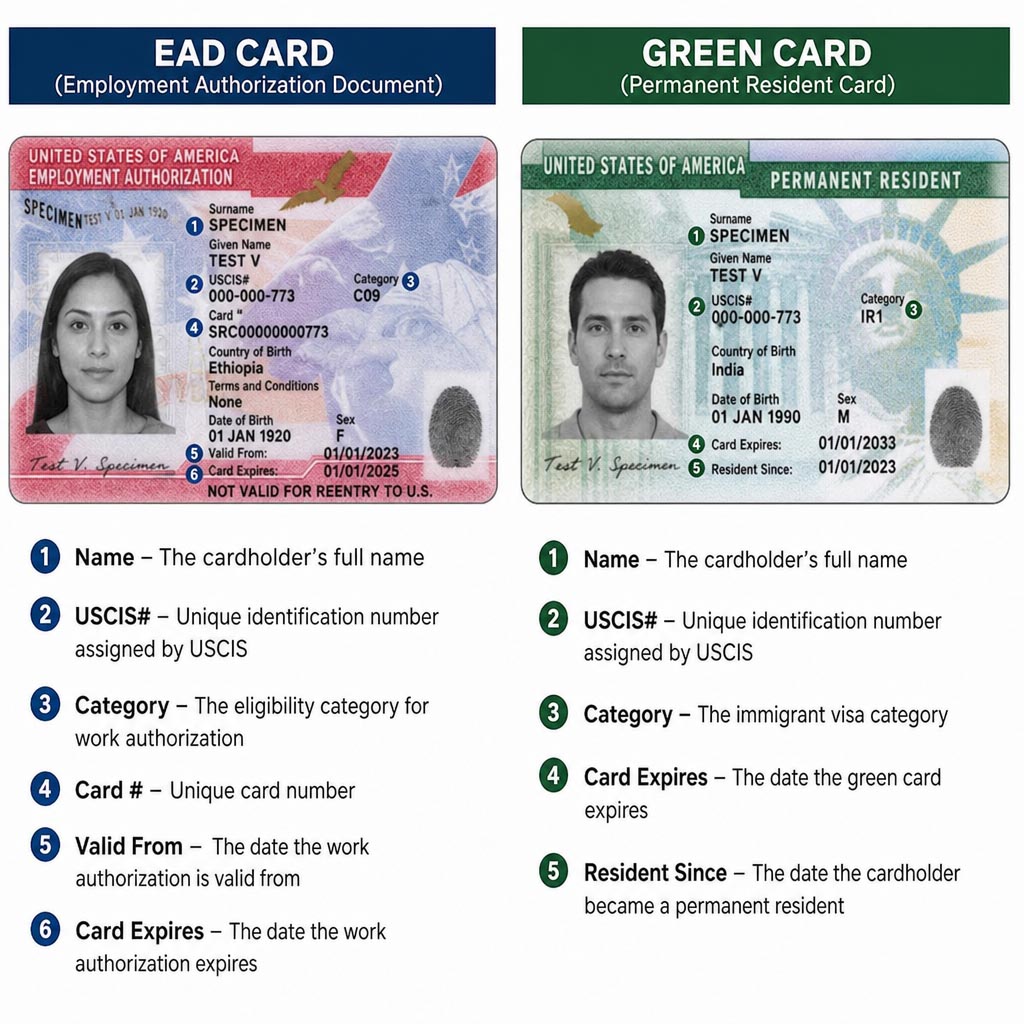
A common point of confusion is the difference between an EAD (Employment Authorization Document) and a green card. An EAD is short-term work permission, often tied to a pending case or a specific status. A green card is permanent residence status; it is not citizenship, but it lasts far longer than an EAD.
Actionable tip: If you’re waiting and thinking about the work permit application process, check whether you qualify for an EAD based on your pending filing and category, then plan your work start date accordingly.
Green Card Eligibility Requirements: What USCIS Generally Looks For
While details depend on your family link and immigration history, green card eligibility in family-based cases usually includes a qualifying sponsor relationship, properly filed petitions and applications, admissibility checks, and financial proof tied to public charge rules.
Core Eligibility Elements
- A qualifying sponsor relationship under the family preference system.
- Properly filed petitions and applications, including key forms like Form I‑485 and Form I‑130.
- Entry checks such as security, medical, and certain criminal or immigration history screens.
- Proof that you will not depend mainly on certain public benefits under the public charge rule framework.
Public Charge Rule Explained in Plain Terms
At a high level, the public charge rule means USCIS may review whether an applicant is likely to rely mainly on the government for basic support. The rules and related forms can change, and results depend on each case.
Actionable tip: Don’t guess. Collect paperwork early – income records, assets, household size, and sponsor papers where needed. If you’re unsure, talk to a qualified immigration attorney or accredited representative.
Immigration Medical Exam Requirements: Don’t Let This Delay Your Case
One common cause of delays is missing or outdated medical paperwork. Immigration medical exam requirements usually include a USCIS‑designated civil surgeon exam, vaccination review, and sealed forms completed correctly.
- A USCIS-designated civil surgeon exam inside the U.S.
- Vaccination review and any needed shots.
- Forms that are sealed and filled out the right way.
Actionable tip: Schedule the exam at the right time. Too early can cause it to expire; too late can slow your interview. Ask the civil surgeon about timing and how to handle the forms.
How to Apply for Adjustment of Status if You’re Filing Inside the U.S.
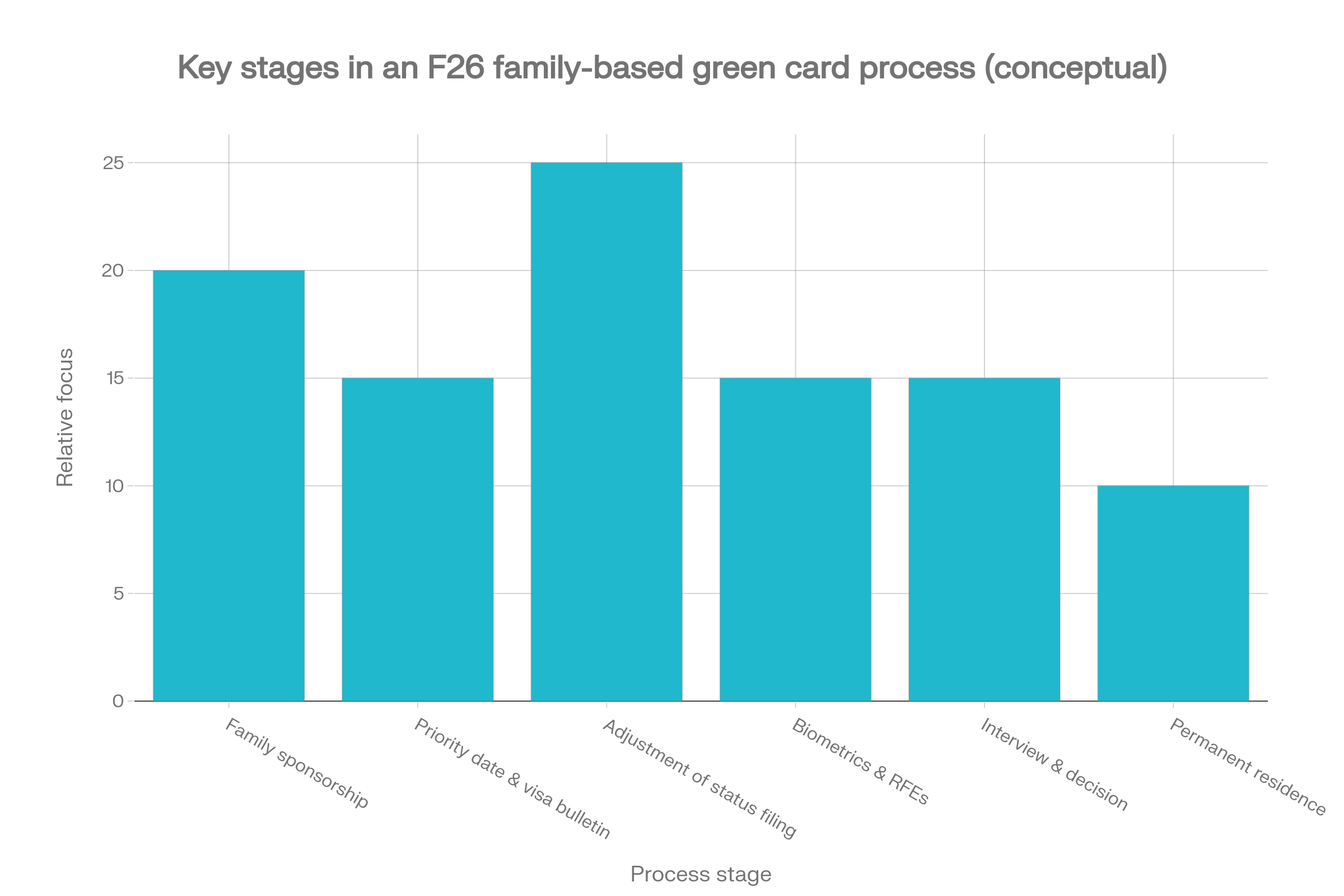
Many family-based applicants file from inside the United States through adjustment of status. If you’re researching how to apply, the usual steps look like this:
- Check that you can adjust. Entry history and category rules matter.
- File the right USCIS forms and fees.
- Include the needed supporting documents.
- Go to biometrics.
- Reply to any Request for Evidence (RFE).
- Attend an interview if scheduled.
- Get a decision and, if approved, the green card.
Work Permit and Travel While You Wait
While an adjustment case is pending, some applicants request an EAD or travel document so they can work and travel while they wait. Planning the work permit application process early is especially helpful if you need to start a job soon.
Actionable tip: Build a filing checklist and ask someone else to check it for missing signatures, outdated forms, or dates that do not match. Small errors can cause big delays.
What Documents Show Lawful Status, and Why You Should Keep Copies
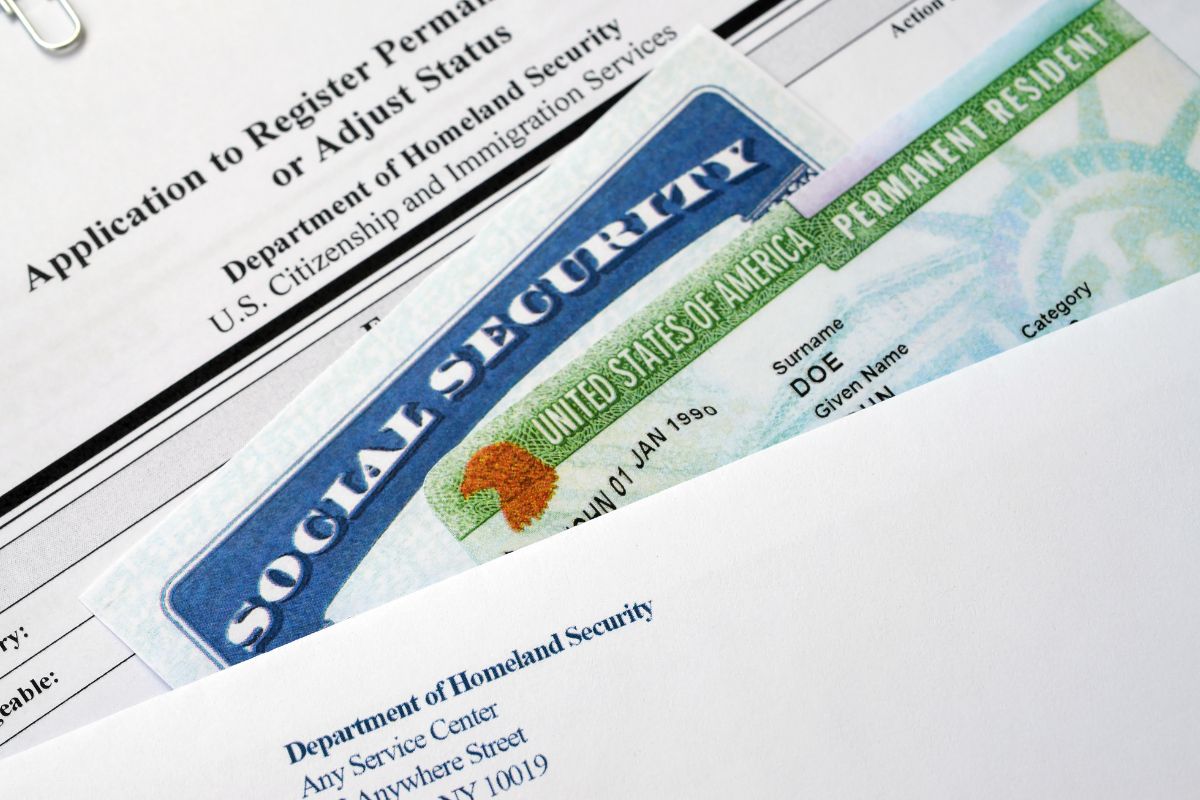
People often ask what documents prove lawful status because employers, DMVs, schools, and agencies may request proof. Depending on your situation, common examples include a Permanent Resident Card, passport with entry stamp or visa, I‑94 record, and USCIS notices for pending or approved cases.
- Permanent Resident Card (green card).
- Unexpired passport with an entry stamp and/or visa, if applicable.
- I‑94 record.
- USCIS receipt notices for pending applications, when relevant.
- Approval notices for petitions or status changes.
- EAD card, if issued.
Actionable tip: Keep scanned PDFs of everything, including front and back of cards. Store them safely in encrypted cloud storage plus an offline backup.
USCIS Case Status Tracking: Practical Ways to Stay Informed
USCIS case status tracking matters because timelines vary and USCIS may mail notices that need quick action. Simple habits can help you stay ahead of deadlines.
- Save each receipt number in one spreadsheet.
- Set calendar reminders to check status regularly.
- Update your address with USCIS right away if you move.
- Open all USCIS mail right away and keep the envelopes.
Actionable tip: If you get an RFE, send a clear cover letter and labeled exhibits. Make it easy for the officer to see that you answered each point.
Family-Based Immigration Sponsorship: How It Fits Into Long-Term Planning
With family-based immigration sponsorship, timing and documents matter most. Because family preference categories can involve longer waits, smart planning helps you avoid avoidable delays.
- Gather civil documents early, like birth, marriage, and divorce records.
- Prepare translations and certifications when needed.
- Record relationship and household details accurately.
- Track priority dates and visa availability, if applicable.
Actionable tip: Use the same names and dates on every form. If you’ve used more than one spelling of your name, add an explanation and supporting proof.
Related Paths and Comparisons People Often Research
Even if you’re focused on F26, you may compare other routes because life changes – work opportunities, urgent needs, or changing family circumstances can shift your best strategy. Employment, asylum, or refugee paths can sometimes run alongside family planning, but you must avoid conflicts between filings or status violations.
Best Visa Options for Workers
If you’re waiting and researching the best visa options for workers, the right choice depends on your education, job offer, country of citizenship, and long-term goals. Employment options can sometimes complement family cases when managed carefully.
Asylum and Refugee Options When Safety Is the Issue
Some people also look at safety options if returning home is dangerous. Asylum and refugee guidance follows different rules than family preference green cards and requires specific evidence and timelines.
From Permanent Resident to Citizen: Citizenship Requirements at a Glance
Once you have a green card, you may later consider citizenship requirements. Naturalization usually involves continuous residence, physical presence, good moral character, English and civics tests, and an interview and oath.
- Meeting continuous residence and physical presence rules.
- Showing good moral character under immigration law.
- Passing English and civics tests, with some exceptions.
- Filing the application and attending an interview.
Actionable tip: Keep a travel log from day one as a permanent resident. Write down every trip in and out of the U.S. It can save hours when you apply.

Takeaway: Make the Benefits Real by Planning the Process
Understanding the F26 Green Card Benefits is not only about what you receive after approval; it is also about how you prepare so you do not lose time to avoidable problems. The main immigration benefits of permanent residence include steady work permission, long-term family stability, and a clearer route to future options like citizenship.
Focus on eligibility, documents, timing, and careful follow-through. Those steps make the process smoother and the result more secure.
Frequently Asked Questions
What Does the F26 Category Typically Refer To in Family-Based Immigration?
F26 is usually a family preference category tied to family-based sponsorship, not employment. It mainly affects where you sit in the family preference system, which shapes visa bulletin timing, who can qualify, and how you plan your case.
Once Approved, What Practical Benefits Do I Get as a Lawful Permanent Resident Under F26?
Short answer: You can live permanently in the U.S., work without a separate EAD in most cases, travel with more freedom than many temporary visas, sponsor certain relatives later, get more job options, and move toward citizenship if you later apply.
How Is an EAD Different From a Green Card During the Process?
An EAD is short-term work permission tied to a pending case or status. A green card gives permanent residence. If you’re waiting, you may be able to request an EAD and travel document so you can work and travel while your adjustment case is pending, but the green card itself gives lasting permission without a separate EAD.
What Eligibility and Documentation Factors Does USCIS Commonly Review in Family-Based Green Card Cases?
USCIS usually looks for a qualifying sponsor relationship, proper forms and fees, proof that you meet entry rules, and financial proof related to public charge rules. Good records – receipts, approvals, income and asset papers, and sponsor documents – help prevent delays and RFEs.
What Steps Help Avoid Delays With Medical Exams and Overall Case Processing?
Book your USCIS civil surgeon exam at the right time, make sure vaccines and sealed forms are complete, and keep a careful filing packet. Use checklists, save digital and paper copies, track receipt numbers, watch USCIS status, answer RFEs clearly, and update your address.
Related Posts